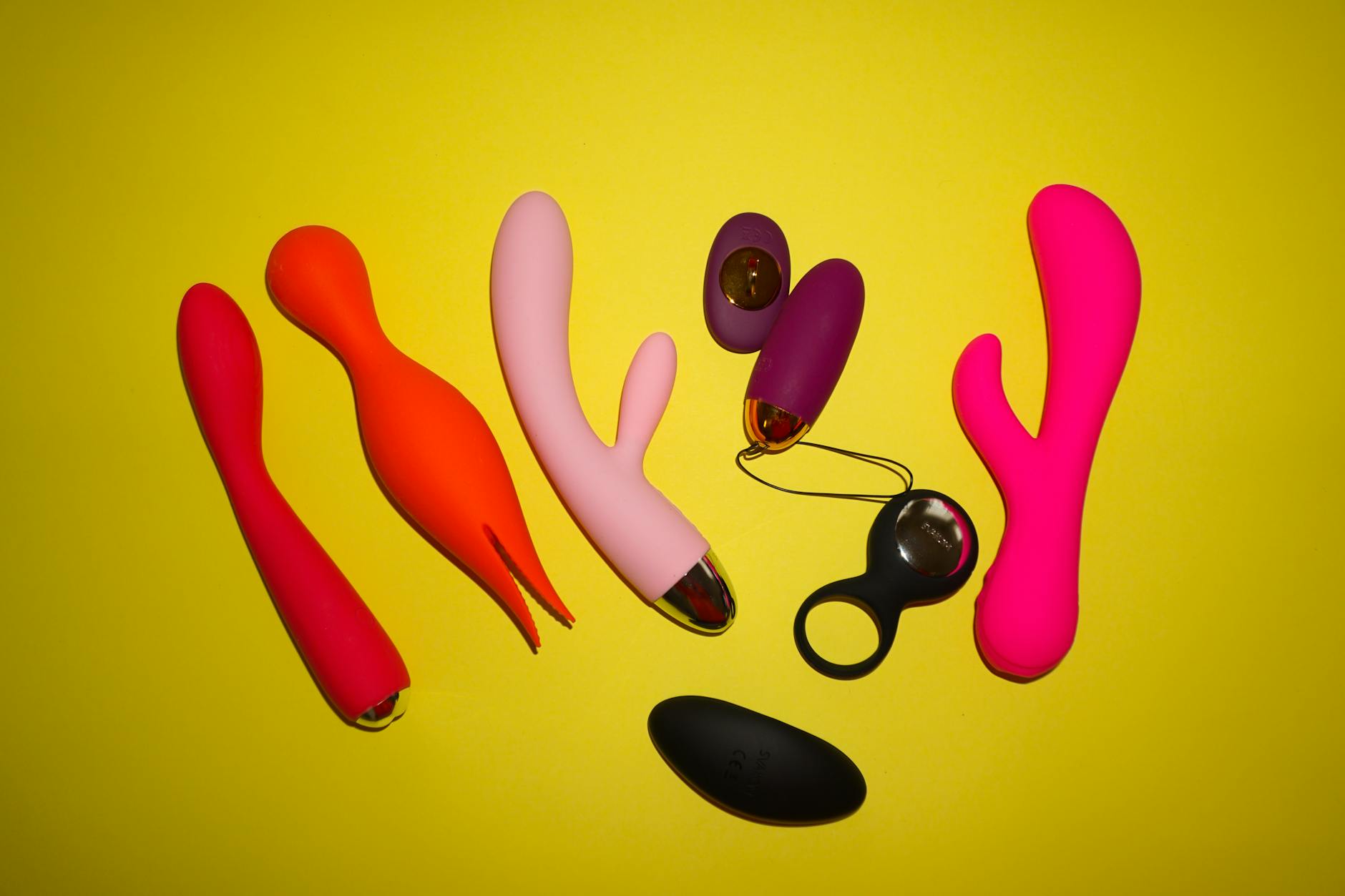
The gap between what you feel and what happens
You're with someone you care about. Things are good. And then something doesn't happen that really should. You don't orgasm. Or it takes so long that the whole thing starts to feel like work instead of pleasure. So you fake it, or you stop trying, and afterward there's this small awkwardness that neither of you addresses.
This is not a rare problem. It's not even really a problem in the way you've been taught to think about it. What it actually is: a mismatch between how your nervous system responds to stimulation and what partnered sex typically provides.
Why partnered sex alone often isn't enough
Here's the physiological part that most people never hear clearly. A penis or fingers inside the vagina stimulates the vaginal walls and the A-spot and the G-spot. That's real stimulation, and it feels good. But the clitoris, which is the primary organ of pleasure for most people with vulvas, sits outside the vagina. During penetration, the clitoris gets indirect pressure and some friction from the pubic mound, but it's not direct stimulation.
This matters because the clitoris has roughly 8,000 nerve endings, and they're configured to respond to very specific kinds of touch. Most people with clitorises need either consistent direct pressure, rhythmic movement, or specialized stimulation like suction to reach orgasm reliably. Partnered penetration gives you motion and pressure, but rarely the consistency or intensity that clitoral tissue actually requires.
The second part is neural. Your brain processes partnered sex as an interactive, relational experience. You're paying attention to your partner's comfort, their rhythm, whether they're close. This cognitive load is real. It's not romantic poetry. It's your prefrontal cortex running a parallel process while your body is trying to build arousal. That split focus alone can interrupt the neurological cascade that leads to orgasm.
What lemon vibrators actually do
A lemon clitoral vibrator, or lemon sucker like the Lem, works because it does what fingers and penetration alone cannot. It delivers precisely targeted, sustained stimulation directly to clitoral tissue. Suction-based vibrators are especially effective because they don't rely on friction. Instead, they create a gentle seal and pulse, which stimulates the entire clitoral complex, not just the surface.
This matters for two reasons. First, it meets your body's actual neurological requirement. The clitoris doesn't need guesswork. It needs consistent, direct stimulation at the right intensity and rhythm. The Lem gives you that on demand, without requiring your partner to hold the same angle and pressure for fifteen minutes while their arm cramps.
Second, using a lemon vibrator in partnered sex changes the cognitive load. You're not trying to coordinate two different kinds of stimulation anymore. Penetration happens, and the vibrator handles the clitoral part. Your brain can relax into pleasure instead of managing logistics. That shift alone can be the difference between an orgasm that takes forty minutes and one that takes eight.
The reassurance you actually need
Here's what I hear from couples who introduce a lemon clitoral vibrator into their sex life: "Why didn't anyone tell us this was possible?"
They weren't broken. They weren't incompatible. One person's body just needed something that another human's body, no matter how skilled or attentive, couldn't provide alone. That's not a failure of desire or connection. That's anatomy meeting design.
Lemon sexual toys and adult toys in general aren't replacements for your partner. They're tools that make partnered sex work better for the body that's actually in the bed. Using a lemon vibrator during sex doesn't mean your partner isn't enough. It means your clitoris has physical requirements that are separate from your emotional connection.
How to actually introduce this without awkwardness
The conversation doesn't have to be deep. You can literally say: "My body works better with direct clitoral stimulation. Can we try using something like the Lem during sex?"
If your partner resists, that's worth a different conversation. Resistance sometimes masks insecurity or a misunderstanding about what you're actually asking for. Sometimes it's genuine discomfort with toys. Either way, that's a separate topic from your body's needs.
If they're game, the logistics are simple. You can use it while they're inside you. You can use it during foreplay and then have penetrative sex. You can use it after they've finished and focus purely on your own pleasure. The point is: the script is flexible. Your body's requirement is not.
What to look for in a lemon vibrator for partnered sex
Not all lemon vibrators feel the same during sex. Suction-based options like a quality lemon clitoral vibrator or lemon sucker are often better than traditional vibrators because they don't require as much repositioning. The seal sits and pulses, so you're not managing angles constantly.
Look for something with quiet operation. It's hard to stay present in your body when the sound is loud enough to feel clinical. Look for a design that's ergonomic enough that you or your partner can hold it steady without hand fatigue. Look for waterproof material if there's any chance of lube contact.
And honestly, start with understanding your own body first. Solo use of a lemon adult toy gives you a baseline. You'll learn what patterns feel best, what intensity you prefer, what rhythm takes you there. Then you bring that information into partnered sex. Your partner doesn't have to guess. You already know.
The relationship shift that happens after
I've worked with hundreds of couples who add lemon sexual toys to their sex life, and the relationship change is consistent. Not because toys are magical. Because success changes the narrative. When you've spent years feeling like your body doesn't work right with a partner, the shame is real. Adding a tool that makes orgasms reliable again isn't just physically satisfying. It's psychologically profound. You're no longer broken. You're just someone whose body works better with a specific tool.
That shift in how you feel about your own sexuality radiates outward. Sex becomes something you want again instead of something you endure. The intimacy improves because you're not silently frustrated. Your partner feels competent again because the outcome is achievable.
When to consider professional guidance
If difficulty reaching orgasm with a partner is paired with never reaching orgasm alone, or with pain, or with significant anxiety around sex, a sex therapist is worth the investment. Sometimes the barrier is neurological or psychological, not mechanical. Sometimes the issue is relationship dynamics, not anatomy. A professional can help you sort which.
But if you've never had trouble orgasming solo, and partnered sex is the issue, you almost certainly don't need therapy. You need a tool designed for the job.
The bottom line
Your body's requirement for direct clitoral stimulation isn't a flaw. It's how most bodies actually work. Partnered sex is wonderful and emotionally important. And it rarely delivers consistent orgasms for people with vulvas without additional stimulation. A lemon clitoral vibrator isn't a workaround. It's the actual solution. Using one doesn't diminish your partnership. It amplifies it.
People also ask
Why do I orgasm easily alone but not with my partner?
Because solo sex and partnered sex are neurologically different experiences. When you're alone, you control pace, pressure, angle, and rhythm completely. Your nervous system isn't managing someone else's comfort or pleasure. You can focus all your attention inward. With a partner, you're managing two bodies and often two different goals. The cognitive load alone can interrupt arousal. Additionally, partnered penetration doesn't target the clitoris the same way your own touch does. A lemon vibrator solves this by delivering the direct stimulation your body needs while your partner provides the emotional and physical presence that makes sex meaningful.
Does using a vibrator mean my partner isn't satisfying me?
No. Satisfaction and orgasm are different things. You can feel deeply satisfied, connected, and aroused without reaching orgasm every time. And you can need specific physical stimulation without that being a reflection on your partner's skill or effort. Lemon clitoral vibrators aren't about your partner failing. They're about your clitoris having specific biomechanical requirements. Penetration alone doesn't meet those requirements for most bodies. That's anatomy, not relationship failure. Using a vibrator is actually solving a mismatch, not naming one.
Is it normal to need vibration to orgasm with a partner?
Yes, extremely normal. Research suggests that roughly 25 to 30 percent of people with vulvas rarely or never orgasm from penetration alone, and significantly more need additional clitoral stimulation. Needing direct clitoral stimulation isn't unusual or broken. It's the majority experience. What's unusual is that partnered sex culture acts like it should naturally happen. A lemon sucker or other lemon clitoral vibrator simply provides what most bodies actually require.
Can I use a lemon vibrator while my partner is inside me?
Yes. That's actually one of the most effective ways to use a lemon adult toy during partnered sex. The penetration provides one kind of stimulation, and the vibrator handles the clitoral part. Some people prefer to use the vibrator during foreplay and then just have penetrative sex. Others use it throughout. There's no one right way. Experiment and find what rhythm works for both of you. Communication matters more than technique.
Will a lemon vibrator make me prefer it to my partner?
Unlikely. Vibrators feel very different from human touch. The clitoral stimulation is more efficient, but the emotional experience is different. Most people use lemon sexual toys as part of partnered sex, not as a replacement. The vibrator handles what your partner's body can't physically do. Your partner handles everything else that matters.
How do I choose between different types of lemon vibrators for partnered use?
Look for designs that are easy to hold or insert, quiet enough that you can stay present, and durable. Suction-based lemon clitoral vibrators are often better for partnered sex than traditional vibrators because they don't require constant repositioning. They seal and pulse, so less active management. Choose something waterproof, test it alone first to understand your preferences, and prioritize comfort over novelty. The best lemon vibrator is the one that gets used because it actually feels good.
References and sources
Lloyd, J., Crosby, R. D., & Chiang, G. (2008). Women who have sex with women: Health perspectives from the 2006 Ontario Women's Health Survey. Women's Health Issues, 18(6), 454-461.
Richters, J., Grulich, A. E., de Visser, R. O., et al. (2003). Sexual practices at last heterosexual encounter and occurrence of orgasm in a national survey. Journal of Sex & Marital Therapy, 29(2), 131-141.
Frederick, D. A., St. John, H. K., Garcia, J. R., & Lloyd, E. A. (2018). Differences in orgasm frequency among gay, lesbian, bisexual, and heterosexual men and women in a U.S. national sample. Archives of Sexual Behavior, 47(1), 273-288.
Vulva facts and clitoral anatomy. American College of Obstetricians and Gynecologists. (2022).