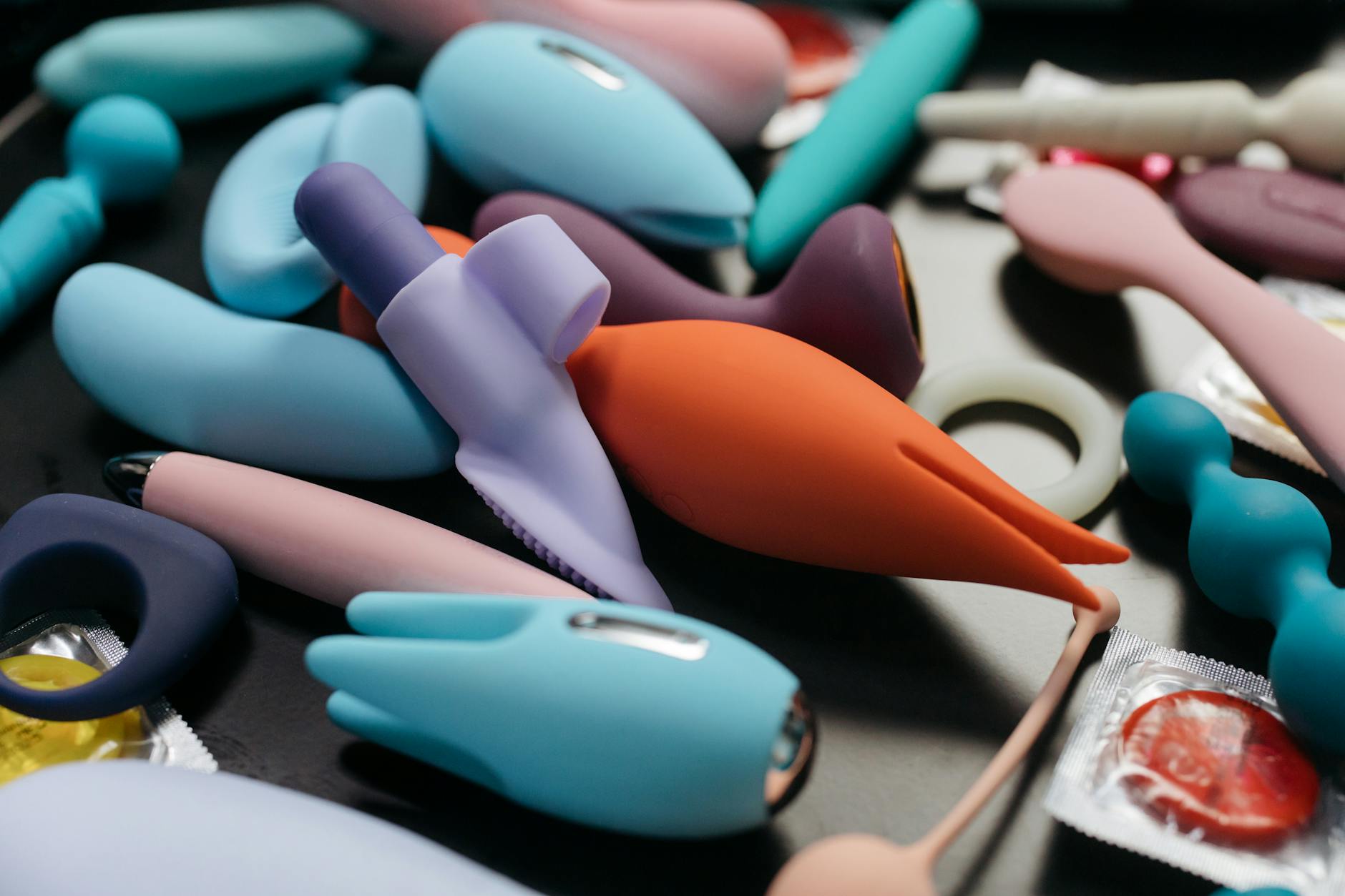
Let's talk about the thing nobody mentions
You can want something and be too uncomfortable to let yourself have it at the same time. That's not weakness. That's human. And it's wildly common when it comes to pleasure.
Self-consciousness doesn't just make sex less fun. It actively shuts down arousal. When your brain is busy monitoring how you look, whether your body is doing the "right" thing, or whether your partner is judging you, your nervous system can't relax enough to feel anything at all. You're performing instead of experiencing. And performing is exhausting.
The neuroscience of shame and arousal
Here's what's happening in your brain when self-consciousness takes over. Arousal lives in your parasympathetic nervous system. It's the "rest and digest" part of your body. Shame and self-monitoring live in your sympathetic nervous system. That's your "threat detection" system.
You cannot be in both at once. It's not a willpower problem. It's neurochemistry. Your body is literally choosing between fight-or-flight and openness. And if you're feeling watched, judged, or exposed, your threat system wins every time.
Most people try to think their way out of this ("I know I should relax"). That doesn't work. Your nervous system doesn't read logic. It responds to safety. And that's where something like a lemon vibrator changes the game.
Why toys actually rewire the shame feedback loop
When you use a clitoral vibrator by yourself, you remove the audience. There's no partner watching your face, no worry about how long it's taking, no performance metric. Your brain can finally go offline about how you look.
But here's the deeper thing. A lemon vibrator gives you something concrete to focus on besides your own self-criticism. Instead of monitoring whether you're "doing it right" or whether you look okay, your attention is on the sensation. You're not thinking about your body. You're in your body.
Over time, this rewires your relationship with pleasure. Your brain starts to understand that pleasure is not something that happens to you while you're being watched. It's something you feel when you're paying attention to sensation instead of judgment.
Solo exploration as foundation work
I often tell clients that self-pleasure with a tool like the Lem is not a substitute for partnered sex. It's foundation work. It's how you learn that your body is worthy of attention. That pleasure doesn't require permission. That you can feel good without earning it or performing it.
When you've spent hours (or years) learning what your body actually enjoys without commentary, everything changes. You walk into partnered intimacy from a different place. You know what you want. You're not trying to figure out whether you deserve it.
And when you do want to include a partner, you can do it from a place of abundance instead of scarcity. You're not asking them to "give" you pleasure you don't believe you deserve. You're sharing something you already know you can access.
The specific advantage of suction vibrators
Lemon vibrators that use air-suction technology (like the Lem) have a particular advantage for people working through shame. Traditional vibration can feel invasive to someone who's already struggling with self-consciousness. You're hyperaware of the vibration on your body.
Suction works differently. It feels like external stimulation without pressure. It's more diffuse. And importantly, it often produces results quickly. That matters because if you're self-conscious, getting to pleasure fast means your shame-brain doesn't have time to take over. You feel something good before doubt can settle in.
Plus, suction vibrators are quieter. If part of your self-consciousness is about being heard, that changes the entire experience.
What happens when you stop performing
One of my clients described it like this. "I realized I was narrating my own sex life instead of living it. I was thinking, 'Good wife moment right now,' instead of actually feeling anything." She'd spent so long worrying about being desirable that she'd completely disconnected from her own pleasure.
When she started exploring solo with a clitoral vibrator, something shifted. She wasn't trying to be sexy. She wasn't trying to be anything. She was just paying attention to what felt good. And that attention itself became a form of self-love.
That's not spiritual talk. That's neuroscience. The moment you stop monitoring yourself and start feeling yourself, your body releases different chemicals. You feel more relaxed. More open. More capable of pleasure.
Bringing this back to partnered intimacy
If you want to eventually include a partner in this picture, the path is usually: solo exploration first, communication second, integration third.
Explore alone until you feel genuinely comfortable and shameless. Then tell your partner what you've discovered. Not in a sexy way if that makes you cringe. Just factually. "I've been using a clitoral vibrator and it helps me relax." That honesty is actually sexier than performance because it's real.
Then, if you want them involved, you can decide together what that looks like. Some people love having a partner watch. Some prefer to use their tool while their partner is doing something else nearby. Some alternate who uses what. There's no right answer.
The throughline is: your pleasure should not require you to override your own discomfort. Ever.
The myth that you should just "get over" self-consciousness
Listen. I say this as a therapist. Anyone who tells you to just relax or just get over your insecurity is missing the point completely.
Your self-consciousness is not a flaw in you. It's likely a reasonable response to messages you received about your body, your sexuality, or what's acceptable. You internalized those messages. They became part of your nervous system.
You don't think your way out of that. You practice your way out. And the practice is: feeling pleasure without commentary. Feeling good in your body without it being for anyone else.
A lemon vibrator is not magic. It's a tool. But it's a tool that lets you practice feeling good without the shame audience in your head. And over time, that practice changes everything.
What actually needs to shift
If you find yourself avoiding pleasure because of self-consciousness, here's what I'd ask you to examine. Where did you learn that your pleasure was something to be embarrassed about? Who told you that?
Was it a parent? A partner? The culture at large? Religious messaging? Your own internalized doubts?
You don't need to solve that question to use a clitoral vibrator and feel better. But you might want to gently notice it. Because part of reclaiming your pleasure is understanding that the voice telling you to be ashamed is not your voice. It's borrowed.
And you get to stop borrowing it whenever you're ready.
FAQ: Self-Consciousness and Pleasure
Can using a vibrator alone actually help with shame in partnered sex?
Yes, consistently. When you practice feeling pleasure without judgment solo, your nervous system learns that pleasure is safe and normal. You're literally rewiring your threat response. That changes how you show up in partnered situations.
What if I feel self-conscious even when I'm alone?
That's common. The shame is internal, not just relational. Here's what helps: start with lower stimulation and a clitoral vibrator like the Lem at a lower pattern. Give your nervous system time to relax. Dimmed lighting, locked door, phone on silent. Remove as many threat signals as possible. Your brain will gradually realize that pleasure alone doesn't require vigilance.
Should I tell my partner I'm using a vibrator if I'm struggling with self-consciousness?
That depends on your relationship safety. If you're in a secure, supportive partnership, honesty usually helps. If you're in a dynamic where your partner might use this information against you or make you feel worse, explore privately first. Your safety and pleasure come first.
How long until self-consciousness starts to ease?
Most people notice a shift within 3-4 weeks of regular solo exploration. Not total disappearance of shame (that takes time and often therapy). But a genuine sense of, "Oh, my body can feel good and that's normal."
Is it weird to use a lemon clitoral vibrator if I've never used any toy before?
Not at all. The Lem is actually a solid starting point because it's intuitive. No learning curve, quiet, and the sensation is gentle enough that you can ease into it without feeling jolted or overwhelmed. Start low, notice what feels good, let your body guide you.
What if my shame is tied to how my body looks?
Body-image shame is different from performance shame, but the tool is the same. When you're using a clitoral vibrator, you're not watching yourself. You're feeling yourself. And sensation doesn't care what something looks like. Your body's ability to feel pleasure has nothing to do with how it appears. That's a hard truth to embody. But a vibrator helps because it shifts your brain from "Am I watching myself?" to "What am I feeling?"