
The problem nobody talks about
Let's be real. The script you've absorbed since adolescence assumes one thing: your partner magically knows what turns you on. And you know what turns them on. Desire is supposed to arrive fully formed, like you've both been reading from the same playbook your whole lives.
Except most couples haven't. One partner might know their own body reasonably well. The other might be completely in the dark. And sometimes, both of you are navigating pleasure like you're reading a map in a language you don't speak.
That uncertainty isn't a red flag. It's actually the setup for something better than stumbling forward in pretense.
Why shared confusion is actually an advantage
Here's what I see in my practice: when one partner knows exactly what they want and the other doesn't, the pressure becomes asymmetrical. The knowing partner either has to lead (which creates a power dynamic), or hold back (which creates resentment). The uncertain partner feels like they're failing a test they didn't know they were taking.
But when both of you are saying "I'm not entirely sure what I like," something shifts. You're suddenly on the same team instead of opposite sides. The vulnerability becomes mutual. The stakes drop. And exploration becomes play instead of performance.
Lemon clitoral vibrators, specifically, change how this conversation happens because they introduce a neutral third element. Instead of "What do you want from me?" the question becomes "What do we both notice happening here?"
The mechanics of shared exploration
A lemon vibrator works differently from traditional vibrators because of the suction pattern. It's not a direct buzzing against the clitoris. It's a rhythm that mimics oral suction, which means it's responding to your body rather than you having to respond to it.
Here's why that matters for couples who don't know what they like yet:
It removes the guessing game. When someone is holding a traditional vibrator, they're responsible for finding the right angle, the right pressure, the right speed. That's three variables the person operating it has to manage. Lemon vibrators reduce that cognitive load. The sensation is more consistent, so both of you can focus on what's actually being felt instead of troubleshooting technique.
It creates a feedback loop. Instead of "Tell me what you want," you're watching and listening to a partner's actual responses. Breathing changes. Movement changes. Eye contact. These are more honest than words, especially when words feel risky.
It normalizes taking turns. If you both start by exploring how a lemon vibrator feels on your own terms first, you're not starting with performance anxiety. You're starting with curiosity. Then when you shift to using it together, the dynamic is already collaborative rather than transactional.
How to actually start this conversation
Don't lead with "We should try a vibrator because we don't know what we like." That's clinical and probably makes both of you want to leave the room.
Instead: "I've been thinking about trying something new that might help us both discover what actually feels good. Nothing fancy. Just something that might make it easier to pay attention instead of perform."
Then, crucially, you separate the first experience from partnered sex. Many couples make the mistake of introducing a lemon vibrator as a prop in what they think should still be traditional sex. That defeats the point. You're not enhancing something. You're starting fresh.
Set aside time when you're not expecting to have sex. No pressure for what comes next. One partner uses the lemon vibrator solo while the other is present (not necessarily watching, just in the room and available). This does three things:
It teaches you your own body's honest response, which is foundational.
It normalizes the tool before it becomes a couple's thing.
It gives the observing partner crucial information about what their partner actually responds to, which is data they don't have from words alone.
Then, if both of you want to, you swap. Same low-pressure approach.
Only after both of you have that solo experience do you talk about using it together.
The conversation that happens after
Once you've both had solo time with a lemon vibrator, the debrief becomes much easier. Instead of abstract conversations about fantasy and desire, you have concrete ground to stand on.
"That pattern felt better than this one."
"I didn't expect that part to feel like that."
"I want to try it longer next time."
These are the conversations that actually teach you something about your partner. Not the abstract "What turns you on?" But the specific "What did you notice about your body that surprised you?"
This data becomes the foundation for partnered exploration. And it's honest because it came from sensation, not expectation. The lemon suction pattern doesn't care about your anxiety or your assumptions about what should feel good. It just produces a real physiological response, and that response is the truth you've both been missing.
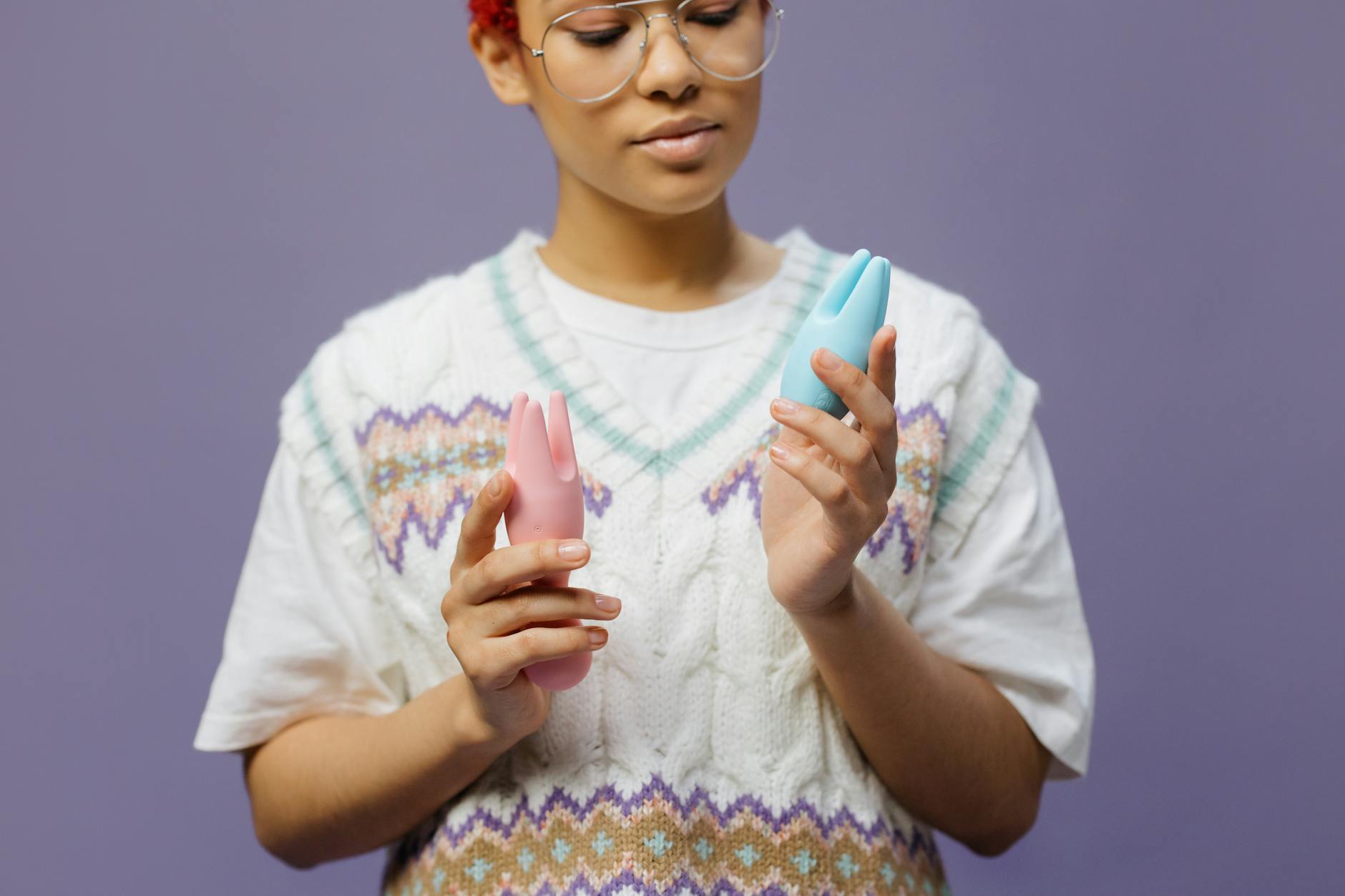
Photo by cottonbro studio on Pexels
Why this matters for long-term couples
Long-term partners often develop what I call "assumption stacking." You've been together ten years, so you assume you know what they like. They assume you know what they like. But assumptions calcify. They become fixed. And fixed desire patterns are actually brittle.
When both partners say "I don't know what I like," you get permission to let go of those calcified assumptions. A lemon vibrator becomes an excuse to approach your partner's body like you're meeting it for the first time. Not in a fantasy way. In a real neurological way. The nerve endings have changed. The tissue sensitivity has changed. Your body is genuinely different than it was five years ago.
Turning that biological reality into an exploration instead of a loss completely reframes the experience. You're not trying to recapture what used to work. You're discovering what works now. That's a fundamentally different (and better) mindset.
When to bring in more support
If you start this process and one partner still feels completely shut down, that's not a vibrator problem. That's pointing to something else. Trauma history, relationship breach of trust, depression, medication effects. All the common things that actually affect desire.
A lemon vibrator won't fix those. But it can be a starting point for the conversation that leads to proper support. "We tried exploring together, and I noticed I'm more shut down than I realized. I think I need to talk to someone about that." That's not failure. That's honesty.
If you're both uncertain about pleasure AND you have a history of mismatched desire, that's also worth bringing to a couples therapist. Not because something's wrong. But because you both deserve a structured space to untangle it instead of fumbling forward in the dark.
The real outcome
Here's what actually happens when two people who don't know what they like start exploring with intention and the right tools.
One of them discovers they prefer gentler stimulation than they thought. The other finds out they need more clitoral engagement than convention suggests. They start noticing patterns about timing, about what helps them relax into sensation, about what their actual bodies are telling them instead of what they thought they should want.
None of that came from the lemon vibrator itself. It came from using it as permission to pay attention. To stop performing the role of "someone who has figured out pleasure" and start being someone who's genuinely curious.
And the thing about shared curiosity is that it's contagious. It becomes the tone for intimacy. Instead of show and tell, it becomes explore and discover. Which is infinitely more interesting than the script you were both pretending to follow.
FAQ: Shared Exploration and Lemon Clitoral Vibrators
What if one partner wants to try a lemon vibrator and the other is skeptical?
Start with information instead of pressure. Show them the difference between suction-based and traditional vibrator technology. Explain that you're not trying to fix anything, just introducing a different sensation. Let the skeptical partner set the pace. Sometimes the best way to convince someone is to try it solo first while they observe. Observation is lower-stakes than participation, and it often builds curiosity.
Is using a lemon vibrator together considered cheating or replacing a partner?
Absolutely not. A lemon vibrator is a tool for pleasure, not a replacement for the connection between partners. In fact, when couples use lemon vibrators intentionally together, it usually deepens intimacy because you're both investing in understanding sensation and presence. The vulnerability of exploring together often builds trust.
How long should we explore individually before using a lemon vibrator together?
There's no fixed timeline. Some couples feel ready after one solo experience each. Others take a few weeks of individual exploration before partnering. The goal is for both partners to feel grounded in their own sensation before combining it with the dynamics of being observed or touching a partner. Listen to what feels right, not to a schedule.
What if one partner has way more pleasure response than the other?
That's normal and actually informative. Different bodies respond differently to the same stimulus, and that difference is valuable data, not a problem to solve. It tells you both where arousal might need more time, or where sensation works best. Instead of viewing it as mismatched, treat it as "We're learning your body's actual language."
Can we use a lemon vibrator if we have different experience levels with toys?
Yes, especially if you have different experience levels. The partner with more toy experience can guide the exploration without pressure. The less experienced partner benefits from having a knowledgeable partner present. The key is keeping it conversational and low-pressure. You're both in discovery mode, even if one of you has more history.
What if we try this and decide we don't actually like vibrators?
Then you've learned something valuable: what you don't like is useful information too. But you've also learned that you can communicate about pleasure without shame, which is the actual win. Some couples discover they prefer touch over toys, or that a lemon vibrator works better solo than partnered. The tool matters less than the permission structure it creates for paying attention together.