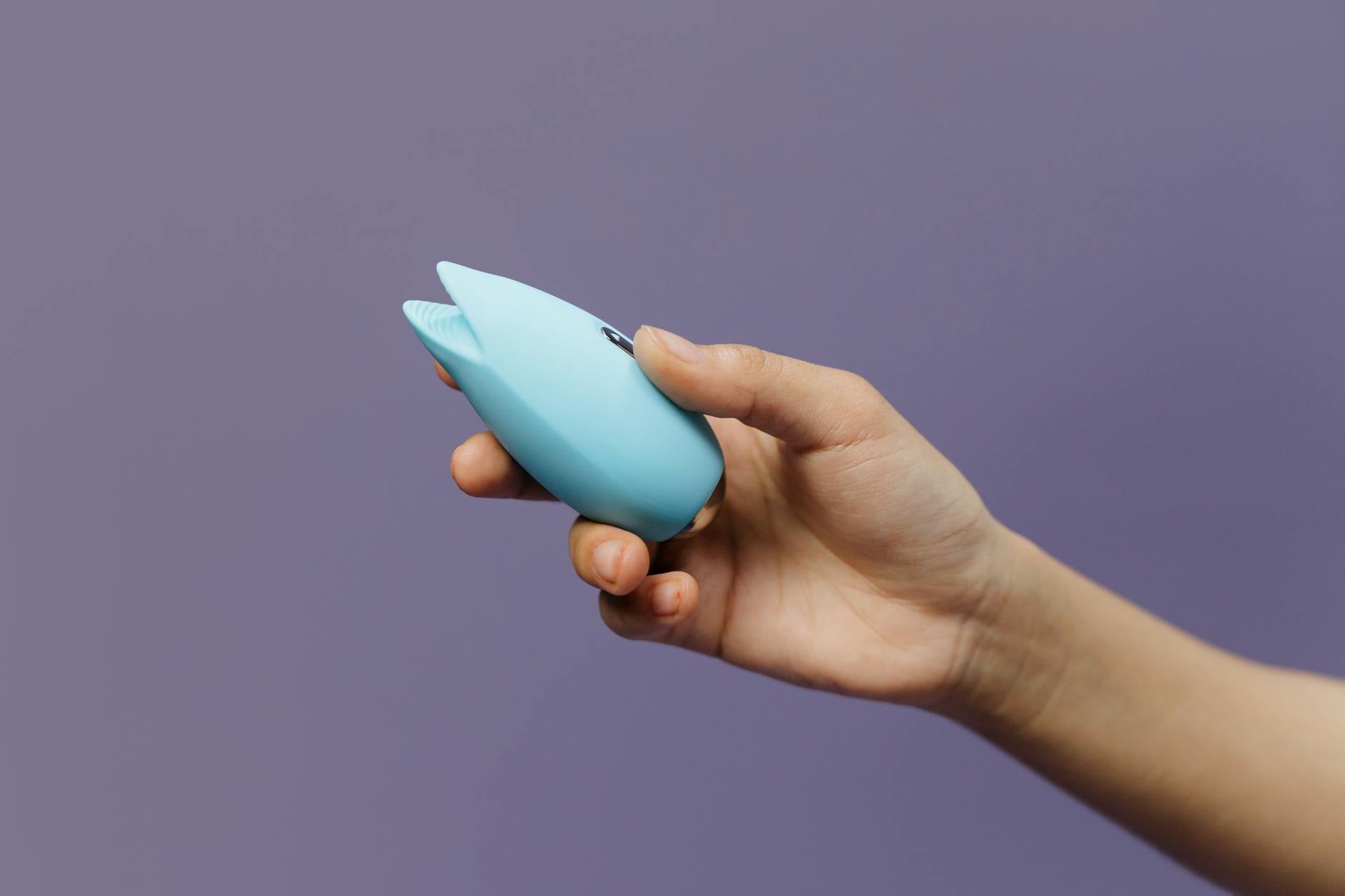
Here's what no one tells you about hormonal IUDs and pleasure
Your hormonal IUD is one of the most effective forms of contraception on the planet. It's also quietly rewiring your brain and body in ways that make traditional vibrators feel like they're not quite hitting the mark anymore. The good news: lemon vibrators, with their unique suction-based design, are often the exact tool that bridges that gap.
I've worked with hundreds of clients navigating this transition. The pattern is consistent. Arousal takes longer. Sensation feels different. And most people assume something's broken when really their body is just responding to a legitimate hormonal shift.
What hormonal IUDs actually do to arousal
A hormonal IUD releases a synthetic progestin directly into your reproductive system. The dose is small, but it's localized, which means it affects your uterus and cervix more than systemic hormonal contraceptives do. Here's what changes:
Desire can dip, especially in the first three to six months. This isn't psychological, though stress about the change can make it worse. The progestin suppresses the LH surge that typically triggers mid-cycle arousal spikes. Your body settles into a flatter hormonal landscape.
Clitoral sensitivity shifts. For some IUD users, the clitoris feels less reactive to traditional vibration. Others describe a kind of numbness in the early weeks. This usually improves, but during that adjustment window, your usual toy might feel underwhelming or even irritating.
Vaginal lubrication often decreases. Not dramatically, but enough that what worked before now requires a touch more support. This is where water-based lube becomes essential, not optional.
Why lemon vibrators work differently for IUD users
The suction mechanism on lemon clitoral vibrators creates stimulation through air-pulse technology rather than direct vibration. This matters hugely for someone whose clitoral sensitivity has shifted.
Traditional vibrators buzz at the tissue directly. If your clitoris feels a bit numb or overstimulated, that direct contact can feel too intense or not quite right. Suction stimulates the clitoris indirectly by creating gentle pressure waves. It's like the difference between poking something and surrounding it.
Many clients report that this approach feels more responsive when their arousal is slower to build. The sensation is broader, less point-focused, which often means it kicks in faster even when the clitoris isn't primed for direct contact.
The lem vibrator also offers multiple intensity levels. Starting at level one or two is crucial when you're adjusting to an IUD. You're building arousal from a lower baseline, which means you need a tool that meets you where you actually are, not where you were before the insertion.
The first three months: what to expect
The adjustment period after a hormonal IUD insertion is real, and it's temporary. Here's what I recommend:
Week one through four: Don't expect much. Your body is managing a foreign object and hormonal shock. If pleasure happens, great. If not, that's normal. Rest.
Week five through twelve: This is when exploration becomes useful. Start with the lem vibrator on the lowest setting. Spend extra time on foreplay. Your brain needs time to signal arousal when the hormonal landscape has changed.
Week thirteen onward: Most people notice their baseline returning, though it may be slightly different than before. Some report feeling more relaxed, less hormonal anxiety. Others find they genuinely prefer this steadier state once they adjust.
The entire arc is individual. Some people feel back to normal in six weeks. Others take months. Both are normal.
Technique adjustments that actually help
You can't just grab the lem vibrator and expect the same experience as before your IUD. Small changes matter.
First, extend your warm-up time. If you typically spend five minutes on foreplay, budget fifteen. The progestin doesn't stop arousal, but it does slow the buildup. This isn't a weakness. It's just different.
Second, start at the lowest intensity setting and stay there longer than you think you need to. The temptation is to jump to level three or four because you're used to that. Resist. Let level one work. Your sensitivity will meet it if you give it time.
Third, use lubrication even if you don't think you need it. Hormonal IUDs can decrease natural lubrication, and the lem vibrator works better when there's a light layer of water-based lube. This isn't about dryness. It's about optimization.
Fourth, pay attention to your cycle even though your IUD is suppressing it. Many IUD users still have slight hormonal variations. Arousal might be more responsive in certain windows. Tracking what you notice helps you plan exploration around your body's actual rhythm, not an imagined one.
The emotional piece (which is half the puzzle)
Hormonal IUDs often arrive with grief that people don't expect. You might feel less sexual drive, and that can feel like a loss of identity if pleasure was a big part of how you experienced yourself.
I hear this a lot: "I feel broken." You're not broken. Your system is adjusting. There's a difference.
If you have a partner, the conversation matters. "I'm on an IUD now, and my arousal is taking longer to build" is useful information. "I feel broken and don't want sex" is a different conversation that often has roots in stress or adjustment rather than actual desire loss.
Give yourself permission to explore without pressure. The lem vibrator, with its gentler approach, often feels less goal-oriented than traditional vibrators. That matters when you're rebuilding your relationship with pleasure during an adjustment window.
When to check in with your doctor
Most changes with hormonal IUDs are normal. But some warrant a conversation with your gynecologist.
If pain appears during sex or with any stimulation, get that checked. IUDs rarely cause pain, but infection or improper placement can. That's fixable and worth addressing.
If complete arousal loss persists beyond four months, mention it. Sometimes a different IUD type works better for your body. Sometimes a tiny hormonal adjustment elsewhere helps. Your doctor can rule out other causes and troubleshoot with you.
If lubrication loss is severe, ask about topical estrogen creams. They're localized and safe even with an IUD, and they can make a significant difference in comfort and sensation.
The unexpected upside
Here's something I've noticed in my practice: many IUD users report that once they adjust, their pleasure becomes more sustainable. Less anxiety about pregnancy. Fewer hormonal mood swings. More mental space for connection.
The lem vibrator often becomes a favorite tool during this phase because it doesn't demand the same intensity-chasing that traditional vibrators do. It rewards patience. It works with slower arousal rather than demanding speed.
Your hormonal IUD isn't the end of good sex. It's a transition point. And the right tool, paired with realistic expectations and a little patience, makes that transition genuinely navigable.
People also ask
Can I use a lemon vibrator right after IUD insertion?
Wait at least one week. Your cervix and uterus need time to settle. After that initial week, you can start exploring gently, but expect to feel pretty tired and not interested in pleasure. That's normal. Most people ease back into sexual activity around week two to three, once the cramping subsides.
Will a lemon clitoral vibrator affect my IUD placement?
No. The lem vibrator stimulates only the clitoris externally. Your IUD sits in the uterus. They're in completely separate spaces. The IUD's position won't shift from any external stimulation. This is one of the reasons suction-based vibrators are so good for IUD users. There's zero risk of mechanical interference.
How often do I need to use lube with my lem vibrator on a hormonal IUD?
Consistently, especially in the first six months. Hormonal IUDs suppress cervical mucus production, which is part of why natural lubrication decreases. Water-based lube is your friend here. A thin layer is enough. Most people find they need it every time initially, then can gradually reduce it as their body fully adjusts to the IUD.
Does arousal ever fully return to pre-IUD levels?
Often, yes. Most people report that arousal does return to baseline by month four to six. Some report it feels different but equally strong. A few find they prefer the steadier baseline that hormonal IUDs create. There's no single answer. Your body will tell you its preference once the adjustment settles.
Can a partner help speed up arousal when I have an IUD?
Absolutely. Longer foreplay, more attention to non-genital touch, and patience are the three ingredients. If you're partnered, the lem vibrator can also be a shared tool. Some couples find that introducing it together makes the whole adjustment period feel more collaborative rather than isolating. You're solving a problem together, not something you're dealing with alone.
Is decreased arousal on a hormonal IUD permanent?
In the vast majority of cases, no. The first three months are the toughest. By month four, most people notice a shift back toward their baseline. Some take longer. If arousal loss persists beyond six months and is genuinely distressing, that's worth discussing with your gynecologist. There are other options, and your experience matters.
You're not adapting to the wrong tool
If you've been using a traditional vibrator and it stopped feeling right after your IUD insertion, that's not a sign you're broken. It's a sign that your body's needs shifted, and a different tool might serve you better. The lemon clitoral vibrator was designed with sensitivity and gentleness in mind, which makes it a natural fit for anyone navigating hormonal changes. Give yourself time to adjust, be patient with the process, and know that pleasure is absolutely still available to you on the other side of this transition. If you have questions about what works best for your body, reach out to us at Hellanancyslem. We're here to help.
This article is for informational purposes only and does not replace medical advice. Always consult your gynecologist about significant changes in sexual function or pain during or after IUD insertion.