
Let's talk about the real barrier
Most people don't introduce a lemon vibrator into partnered sex because they're worried it means something's wrong. Or that it'll feel clinical. Or that their partner will take it personally. None of those things actually happen when you do this right.
What actually happens is a conversation about what you both want that you probably should have had three relationships ago.
Why partners get nervous about toys
The anxiety usually boils down to one sentence: "Does this mean I'm not enough?" That's a legitimate question that deserves a straight answer. Here it is. No. It does not mean that. It means you want more pleasure. Your partner wanting more pleasure doesn't mean they don't love you. It means they're human.
Think about it this way. You don't stop eating your favorite food because you discovered dessert exists. You just also eat dessert now.
What's actually happening when you introduce a lemon vibrator to partnered sex is that you're adding data to the system. You're giving your partner real-time information about what feels good, where, and for how long. That's not replacement. That's collaboration.
The mechanics of using lemon vibrators together
There are roughly three setups that work best. The first is external use during partnered penetration. A lemon clitoral vibrator like the Lem works brilliantly here because the suction sensation is completely different from penetrative pressure. You get simultaneous but distinct sensations. Your partner can feel the subtle vibration through their body if they're inside you, which adds a sensory dimension they weren't expecting. It shifts the experience from "him and me" to "us and this thing we're doing."
The second setup is foreplay integration. This is lower stakes and honestly easier to start with. You use the lemon vibrator on yourself while your partner is present and engaged. They can watch, they can help, they can touch you elsewhere. The Lem in particular has a quiet motor, so there's no industrial-sized buzz killing the mood. It's just another layer of sensation.
The third is mutual exploration. Your partner holds the toy. They control the intensity, the pattern, the placement. This often creates the most intimacy because there's active collaboration and real-time feedback. "More here," "slower," "right there." You're basically having a physical conversation.
What actually improves in the dynamic
When I work with couples bringing toys into their intimate life, I track what shifts. Orgasm happens faster for most people, which sounds shallow but it's not. Faster orgasm in a partnered context means less mental distraction. Your body gets to the finish line without your brain running three simultaneous threads about whether you're taking too long or whether your partner is getting bored. That mental stillness creates space for actual presence.
Second, friction decreases. And I mean that literally and metaphorically. You're no longer performing an orgasm that may or may not be actually happening. Your partner can see the physical response of the toy and your body reacting to it. Performance pressure drops to nearly zero. What's left is just sensation and feedback.
Third, conversation becomes easier. Once you've bought a toy and used it together, the door to talking about sex stays open in a different way. You've already said "I want more," so saying "I like this and not that" becomes less frightening. You've normalized the idea that pleasure is worth pursuing.
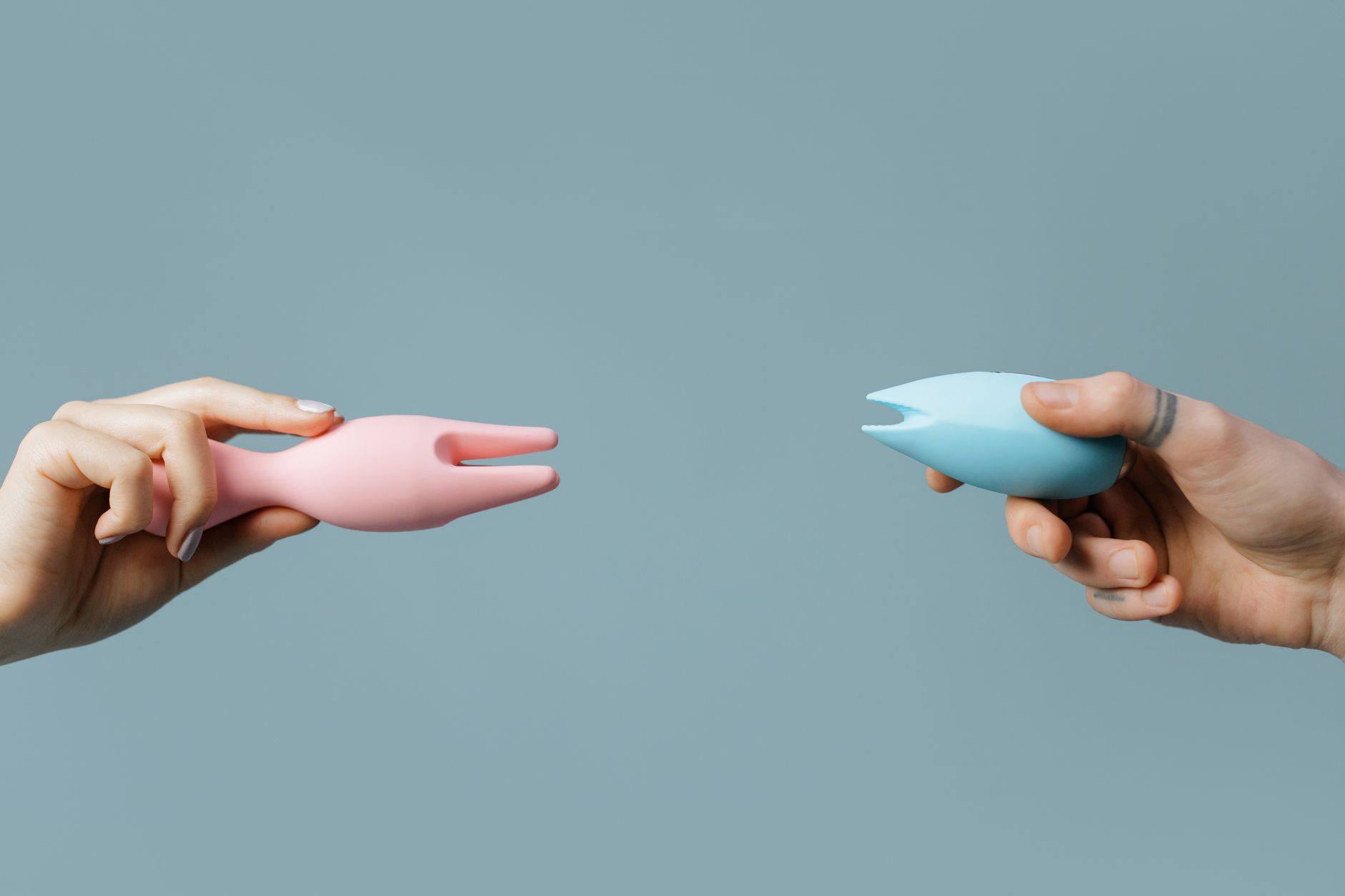
Photo by cottonbro studio on Pexels
The conversation you actually need to have first
Before you buy anything, sit down and talk about what this is for. Not in a clinical way. Just be honest. "I want to feel more during sex" is a complete sentence. "I'd like to explore this together" is enough. Your partner doesn't need a ted talk about clitoral vibrators. They need to know that you want to include them, not exclude them.
Address the actual fear if it surfaces. If your partner says something like "Are you bored with me?," the answer is "No. I'm bored with the same pattern." That's different. That's actionable. That gives you both something to work with.
If you're using a lemon sexual toy with a partner for the first time, also acknowledge that it might feel awkward at first. It probably will. That's okay. Awkwardness during sex with someone you trust is actually low stakes. You can laugh, you can pause, you can try again. The fact that it's slightly weird the first time doesn't mean it won't become completely normal by the third time.
The technical setup that works
Water-based lubricant is non-negotiable. Most lemon clitoral vibrators are silicone, which means they need compatible lube. Have it ready before you start. The suction sensation of a toy like the Lem works best with a bit of glide. You're not using a ton, just enough that the toy seals properly.
Start with lower intensities. Most people who've never used a lemon vibrator before assume they need to go straight to maximum. They don't. Pattern 1 or 2 on the Lem is often plenty. Intensity can increase from there if you want it to. Building up is better than overshooting and then having to dial back.
Timing matters more than you'd think. A lemon sucker works best when you're already aroused. That means your partner should spend time on foreplay first. Use the toy not as the opener but as a middle or final act. This isn't because toys are somehow "second best." It's because your body's going to respond better to stimulation when blood is already flowing and you're primed.
What to do if it doesn't feel good
Sometimes it just doesn't work the first time. That's completely normal. The reasons vary. Angle might be off. Timing might be wrong. You might not be as relaxed as you thought. None of that means the toy is bad or that you and your partner don't work.
When something doesn't click, pause and talk about it without judgment. Not during sex. After. "That felt weird to me," is useful information. Your partner can learn from it. So can you. Maybe a different position helps. Maybe using the toy solo first helps you understand what you actually like. Maybe you try again in a few weeks. <a href="/blog/how-lemon-vibrators-help-when-you-have-difficulty-reaching-orgasm-with-a-partner">Learning to reach orgasm with a partner often takes experimentation</a>, and adding a tool to that process just gives you more variables to play with.
The worst thing you can do is suffer through a mediocre experience in silence and then avoid the toy entirely. Give yourself and your partner a genuine second attempt.
When this actually transforms things
I've worked with couples where introducing a lemon vibrator or similar toy created a real turning point. Not because the toy is magic. But because it forced a conversation about pleasure that they'd been avoiding for years. Suddenly they're talking about what they want. They're being present during sex instead of checked out. They're laughing at the awkwardness instead of pretending it doesn't exist.
That conversation is the thing that changes the dynamic, not the toy itself. The toy is just the catalyst.
<a href="/blog/why-lemon-vibrators-feel-different-in-long-term-relationships-and-how-to-reconnect">Long-term relationships often need a reset point</a>, and sometimes that reset point is permission to want more from sex. Once you have that permission, everything shifts.
Common questions about lemon vibrators and partnerships
Can I use a lemon vibrator during PIV without it damaging anything?
Yes, absolutely. A toy like the Lem is designed for external use, which means it sits on the clitoris while penetration happens. There's no conflict. Some people worry about the vibration transferring through tissue and causing discomfort inside, but that's not how the mechanics work. The suction sensation is localized. Your partner won't feel anything weird on their end except maybe a slight vibration if you're in very close contact. Most people report it's actually pleasurable.
What if my partner wants to control the toy but doesn't know what to do?
Show them. Literally. Use it on yourself first so they can see where it goes, what patterns feel good, how much pressure helps versus hurts. Then hand it over. The learning curve is about thirty seconds. Most people figure out the basic on and off and pattern cycling quickly. Everything else is feedback from you.
Does using a lemon clitoral vibrator with a partner mean I can't orgasm without it?
No. That's a common worry and it's not based in reality. Your body doesn't become "addicted" to a particular sensation the way people fear. You can still orgasm without the toy. You can also have the option of using it. Having options doesn't eliminate the baseline.
How do I bring this up if we've never talked about toys?
Don't make it complicated. "I've been thinking about exploring this together" is enough. You don't need a thesis statement. You don't need to say it right before sex. Say it over coffee. Say it matter-of-factly. Your partner's going to be way less freaked out by your calm directness than by you being cagey about it.
What if my partner says no?
Then you have a different conversation to have. What's behind the no? Is it discomfort with change? Is it shame around sexuality? Is it a logistics issue? Those are all different conversations with different solutions. The no isn't final. It's usually information that something else needs attention first. Sometimes it's just "not right now," which is also fine. You can circle back.
Is it weird if we use the toy sometimes but not always?
Completely normal. Most couples who use toys use them sometimes, not every time. You're adding a tool to your kit, not replacing your entire approach. You'll have nights where the toy makes sense and nights where it doesn't. That variation is actually healthy.
The real shift that happens
When you and your partner successfully integrate a lemon vibrator or similar toy into your intimate life, the change isn't just physical. It's psychological. You've both agreed that pleasure matters and that pursuing it together is worth the awkwardness of the setup conversation. You've normalized the idea that sex is collaborative problem-solving instead of performance art.
That shift carries into other parts of your relationship. Suddenly you're talking about other things you want. You're advocating for your needs more clearly. You're less defensive when your partner advocates for theirs. A clitoral vibrator seems like a small thing, but it's often the door opener to a much larger conversation about what you both deserve.
If you're thinking about trying this, start with that conversation, not with the purchase. The tool is easy. The communication is the real work. Once you have that, everything else follows.
If you have questions about how to navigate this in your specific relationship dynamic, we're here to help. Reach out at <a href="/contact">Hellanancyslem contact</a> and we can talk through what makes sense for you.