
The myth that one type works for everyone
Here's what I hear most often: "I tried vibrators and they didn't work, so I gave up on toys entirely." Then six months later, that same person tries a lemon suction toy and has an experience that changes everything. It's not that they were broken. They'd just been reaching for the wrong tool.
The clitoris is wildly sensitive and equally individual. Vibration and suction create completely different sensations, and the one that works best for you depends on your anatomy, your nerve density, and how your body responds to pressure versus rhythm. Knowing the difference isn't just nice to know. It's the thing that separates "toys aren't for me" from "oh wow, this is exactly what I needed."
How vibration actually works
Traditional vibrators move back and forth, side to side, or in patterns. That movement stimulates nerve endings through repetitive friction and displacement. The faster the vibration, the more intense the stimulation becomes. Think of it like a jackhammer: direct, rhythmic, relentless.
This works brilliantly for people with certain types of clitoral sensitivity. If your clitoris responds well to consistent, direct stimulation, and if you like being able to control intensity with speed settings, vibration is probably your answer. Vibrators also tend to be smaller, quieter, and easier to use with a partner.
But here's where vibrators fall short for some bodies. If you have a sensitive clitoris, if the idea of direct friction makes you wince, or if vibration creates numbness after a few minutes, you might be what I call "vibration-fatigued." Your nerves actually adapt to the repetitive motion and dial down their response. The faster you go, trying to compensate, the quicker the numbness sets in.
How suction actually works
Suction creates a seal and uses air pressure to stimulate the clitoris without direct touching. Instead of friction, you're getting gentle or intense pressure that pulses and releases. It's less like a jackhammer and more like the feeling of a partner's mouth.
This matters because suction works on different nerve pathways than vibration does. Your clitoris has over 8,000 nerve endings, and they don't all respond to the same stimulus. Some activate with direct vibration. Others light up with pressure and suction. The lemon clitoral vibrator, for example, uses air-pulse technology to create that sensation.
Why does this matter? Because suction tends not to cause that adaptation fatigue. You can use it longer without hitting a wall of numbness. You also have more control over intensity without needing your partner to "go faster" as a solution. The sensation stays fresh throughout.
Your anatomy tells you which one to start with
Think about how your clitoris sits. Is it more external and prominent, or does it hide under your hood? That affects which tool you should reach for.
If your clitoris sits very externally and points forward, vibration often works brilliantly because the toy can reach it easily. If your clitoris tucks under the hood or is more internal, suction has a real advantage because it creates that seal and pulls gently, making the nerve cluster more accessible.
If you've always had difficulty reaching orgasm with fingers or a partner's mouth, that's actually a strong signal that suction toys might change the game for you. You're probably not broken. You've just been missing the right amount and type of pressure.
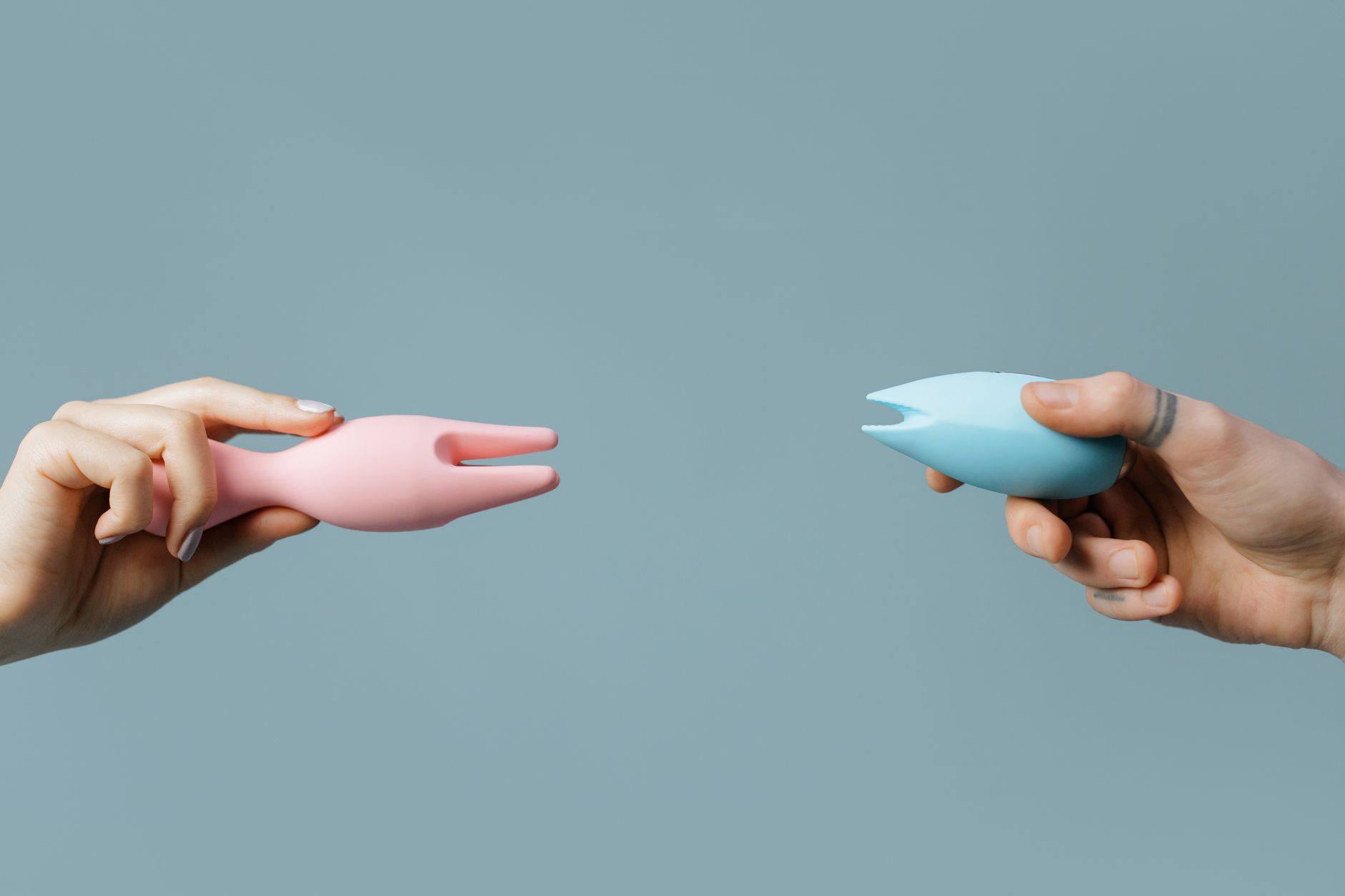
Photo by cottonbro studio on Pexels
Sensitivity and nerve response
This is where it gets really personal. Some people have what I call "high-threshold" clitorises. They need intense, sustained stimulation to wake up. These bodies usually do great with traditional vibrators because they can deliver that steady intensity.
Other people have "low-threshold" clitorises. Gentle pressure feels amazing. Too much vibration feels overwhelming or numb-making. For these bodies, even a mid-range vibrator can feel like too much, too fast. Suction, especially at lower settings, often hits the sweet spot because you're getting stimulation without that repetitive fatigue.
Here's a practical test: think about sex with a partner. Does your clitoris prefer being rubbed firmly, or does gentle pressure and occasional movement feel best? That preference isn't random. It tells you something about your nerve response.
If you tend to prefer the gentler end of stimulation, lemon vibrators with suction technology are worth trying. If you like intensity and speed, traditional vibration is probably your faster route to satisfaction.
Lubrication and comfort
Vibration, especially with texture, can require more natural lubrication to stay comfortable. You're creating friction, and friction without adequate wetness leads to irritation or numbness.
Suction requires less friction but more seal contact. Some people find that incredibly comfortable. Others feel like the seal is too intense. Neither is wrong. It's just a question of what your body prefers.
One practical advantage of suction: if you have less natural lubrication (whether from hormones, medication, or just how your body is made), suction toys often work better because they're not relying on that friction mechanism. Water-based lube can enhance either experience, but it's more essential with vibration.
Time to orgasm and sustained pleasure
There's a real difference in the experience between vibration and suction when it comes to how long it takes to reach orgasm and how it feels when you get there.
Vibration tends to get you there faster if it's the right toy for your body. That intensity builds quickly. But some people find that speed means the orgasm arrives and leaves almost as fast, or doesn't arrive at all if you hit that adaptation wall.
Suction tends to build more gradually and sustain longer. Many people I work with report that suction-based orgasms feel deeper and last longer, even if they take a few extra minutes to build. That's because suction is engaging deeper structures and different nerve pathways. You're getting a fuller, more layered experience.
Partner play versus solo
If you're using a toy with a partner, that changes the equation slightly. Vibrators are often easier to incorporate into partnered sex because they're compact and can work alongside hands or a partner's body. You're not fighting for space.
Suction toys require a bit more real estate and sometimes feel better as solo experiences, though that's not a hard rule. Some couples love incorporating them together. It's just worth knowing that if partner integration is important to you, a traditional vibrator might feel less logistically complicated at first.
The practical decision tree
Start here: Can you reach orgasm reliably with your fingers or a partner's mouth? If yes, think about what that sensation requires. Is it pressure? Movement? Both? Whatever works with your body will probably work with a toy that mimics it.
If you struggle to reach orgasm through conventional means, that's your signal to try something different from what you've attempted before. If you've mostly used vibrators, try suction. If you've mostly used suction, try a vibrator with texture or higher intensity.
Consider your sensitivity too. If you're someone who gets overstimulated easily or finds most vibrators frustrating, suction is worth the experiment. If you love intensity and speed, vibration is probably your baseline.
Honestly? The best approach is to try both if you can afford to. A basic vibrator and a quality suction toy from Hellanancyslem give you two completely different experiences. Some people find one they love and stick with it forever. Others keep both, depending on mood, energy level, or what they're trying to feel that day.
Questions to ask yourself before buying
Does direct touching of your clitoris feel amazing or too intense? That answer matters. Does vibration make you numb after a while? Also matters. Do you have less natural lubrication than you used to, or than you'd like? Suction might be your friend.
Do you reach orgasm easily with partners but struggle solo, or vice versa? That tells you something about what kind of stimulation your body responds to best. Are you someone who likes to feel sensation change and evolve, or do you prefer consistency?
There's no right answer to any of these questions. They're just signposts pointing you toward the tool your body will actually enjoy using.
Why starting with the right tool matters
I see this pattern constantly: someone buys the "most popular" vibrator, it doesn't work, and they assume they're the problem. Then they avoid toys for years. That's such a waste of potential pleasure, honestly.
You're not broken if a vibrator doesn't work for you. You might just need suction. You're not weird if you prefer gentle pressure to intense speed. You might just respond to a different stimulus. The clitoris is endlessly variable, and that's not a limitation. It's an invitation to figure out what actually feels good in your specific body.
FAQ
Are suction toys better than vibrators?
Neither is universally better. Suction toys are better for some bodies and situations; traditional vibrators are better for others. The "better" toy is the one that works for your specific anatomy and nerve response. Some people love both and use them for different occasions.
Can I use suction toys if I have a sensitive clitoris?
Yes, actually more easily than you might use traditional vibrators. Suction works at different pressure levels, and you can start with lower settings. Many people with sensitive clitorises find that suction gives them more range and control than vibration does. If direct vibration makes you numb or overwhelmed, suction is often worth trying.
Do I need special lube for suction toys?
Not always, but water-based lube can enhance the seal and make the experience more comfortable, especially if your natural lubrication is light. Silicone lube works too, though you need to be careful not to use it with silicone toys, since it can degrade them over time.
How long does it take to orgasm with a suction toy versus a vibrator?
It varies wildly from person to person. Some people find suction gets them there faster because it engages different nerve pathways that haven't adapted yet. Others find vibration works quicker if it's the right intensity. The best way to know is to experiment with both and see what your body prefers.
What if I've never used any toy before?
Start with whichever appeals to you more, honestly. If you're worried about intensity, suction toys give you more graduated control. If you like directness and simplicity, a traditional vibrator might feel more intuitive. You can always try the other later. There's no wrong entry point.
Can my partner use these toys on me during sex?
Yes, both suction and vibration can work during partnered sex, though vibrators tend to be easier to incorporate logistically. Talk with your partner beforehand about what you want to explore. Some couples find toys enhance connection; others feel unsure. Communication matters more than the toy itself.
The real win
You deserve to know what actually feels good in your body. That's not selfish or complicated. It's information. And the difference between reaching for the wrong tool and reaching for the right one is enormous. Whether that's a traditional vibrator, a lemon suction toy, or something else entirely, what matters is that you find what works. Your pleasure isn't one-size-fits-all, and it shouldn't have to be.
If you're ready to try something new, start with how to start using lemon vibrators if you've never tried suction toys before to learn proper technique. Or explore why lemon vibrators work better for sensitive clitorises after hormonal shifts if your sensitivity has changed over time.