Let's talk about the silence after
Divorce ends a marriage, but it doesn't end your body's need for pleasure. What it does is interrupt the narrative you were living in. For years, sexual intimacy was woven into a partnership story. Now that story has stopped, and you're standing in a room by yourself, wondering if pleasure still applies to you.
It does. But the path back isn't the same one you took before.
What I've observed in my practice is that people who've come out of long marriages often experience a strange guilt around solo pleasure. There's a voice that says, "That's self-indulgent now" or "I should be focusing on healing." Both are lies. Pleasure and healing are not opposing forces. They're often the same thing.
Why pleasure feels different after separation
Three things happen to your body and mind after a relationship ends.
First, your nervous system is in a mild state of activation. Whether the divorce was mutual or acrimonious, your body has been through a transition. You're regulating stress hormones, rebuilding your sense of safety, and learning what alone feels like. That's not a state that naturally reaches for pleasure at first. But once you begin to feel steady again, your body genuinely wants it.
Second, there's often grief sitting underneath the silence. You're not just mourning the relationship. You might be grieving the version of yourself that existed within it. That version had a sexual role, a sexual rhythm, a sexual story. Rebuilding means asking: who am I sexually when I'm not partnered? The answer isn't obvious, and it shouldn't be rushed.
Third, there's permission to explore in ways you might never have. If your marriage had mismatched desires, you might have been quietly not exploring certain things. Or maybe you were deeply enmeshed in someone else's preferences. Solo exploration is where you get to ask: what actually turns me on? Not what works for both of us, not what I think I should want. What do I actually want?
How lemon vibrators reset the conversation with your body
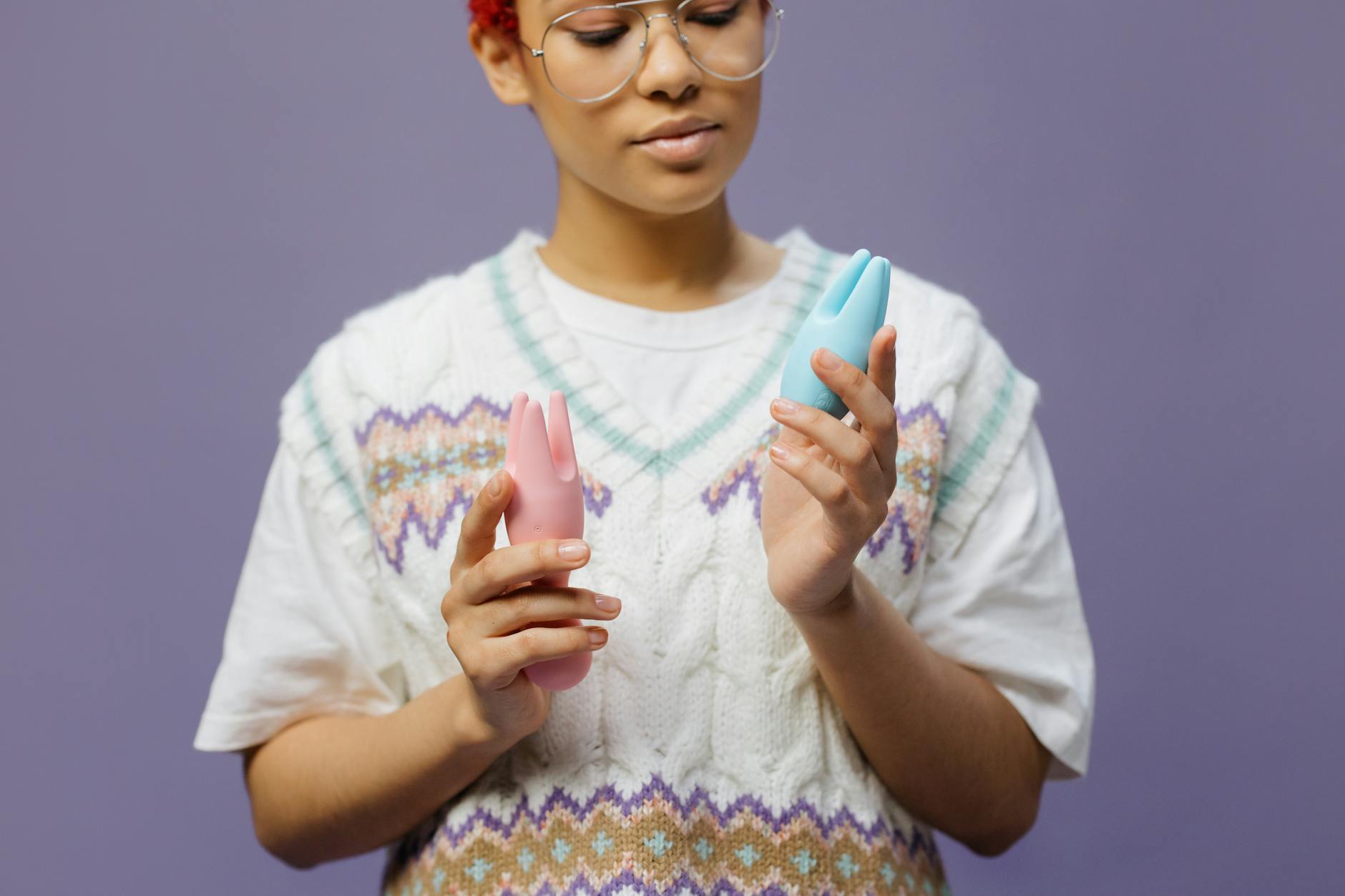
A lemon clitoral vibrator works differently than a traditional vibrator because it uses suction instead of vibration. That matters after a relationship ends for reasons that have nothing to do with technique and everything to do with psychology.
When you've been touched by one person for years, returning to your own touch can feel weirdly clinical. A traditional vibrator amplifies that feeling because it's purely mechanical. You're using a tool that buzzes. Functional, sure. But not particularly intimate with yourself.
A lemon sucker like the ones Hello Nancy makes works through a completely different mechanism. The sensation mimics what human mouths do. That distinction matters because it bridges the gap between partnered touch and solo touch. You're not replacing a partner. You're reintroducing yourself to sensation in a way that feels less like a departure from intimacy and more like a reconnection to it.
Most of my clients report that exploring with a lemon vibrator after separation feels less lonely than they expected. The sensation is rich enough that your brain doesn't have the bandwidth to narrate guilt or failure. You're just present with sensation. And in that presence, something shifts.
Rebuilding your relationship with solo pleasure
Here's what I recommend to people starting this journey again.
Start by removing the performance layer. Before you even touch a lemon clitoral vibrator, spend a few weeks just being in your body without a goal. Take baths. Notice what textures feel good. Sit outside. This isn't sexy preparation. It's nervous system recovery. Your body needs to remember that pleasure exists outside of partnered context.
Then, approach your first solo experience with curiosity, not expectation. A lot of people set themselves up by thinking, "This should feel amazing." Then when the first time is just... fine, they assume they're broken. You're not broken. You're rebuilding. The first time is data collection. How does this feel? Do I like this pattern better than that one? There's no right answer.
Invest in a lemon vibrator specifically because it changes the tone of the experience. Whether you choose the Lem or another design, a lemon sucker does something psychological that a traditional vibrator doesn't. It says: I'm exploring this as something inherently pleasurable, not as a substitute or a workaround. That mindset shift matters more than the device itself.
Create actual space and time for this. Not "whenever I have a free fifteen minutes," but dedicated time when you're not going to be interrupted and you're not going to feel rushed. Pleasure after separation needs protection. It needs you to say: this matters. My body matters. This experience matters. Block the time like you would a therapy appointment.
The emotional layer no one mentions
What often surprises people is that exploring solo after divorce isn't purely physical. Orgasms can actually trigger grief. You might experience a release that includes sadness alongside pleasure. That's completely normal, and it doesn't mean anything is wrong.
Your body spent years being touched in a particular context. That context included all kinds of emotional information: safety, closeness, validation, history. When you're solo again, those associations don't disappear overnight. So sometimes when you reach pleasure, you also reach loss. Both sensations are real. Both deserve space.
This is why rushing into solo exploration before you've done any emotional processing usually backfires. But once you've started to grieve and heal even a little, adding pleasure back in actually accelerates the healing. Because pleasure says: I'm still here. My body still works. I still deserve this.
Practical things that help
Beyond the lemon vibrator itself, four things shift the experience.
Privacy and silence. Not necessarily solitude, but the knowledge that you won't be interrupted. Some people need music or a specific setting. Others just need quiet. Notice what your nervous system actually wants.
Lubrication. After a relationship ends, some people notice changes in natural lubrication. Stress, hormonal shifts, and just the absence of partnered arousal can all affect this. Use whatever you need. A water-based lube works perfectly with silicone lemon vibrators and removes any friction that might pull you out of the experience.
Patience with the learning curve. A lemon vibrator works through suction, which is a different sensation than direct vibration. It might take three or four explorations before you find the pressure and pattern that works for your body. That's fine. You're learning your own body again, from a new starting point.
Permission to take breaks. You don't have to rebuild solo pleasure all at once. Some weeks you'll be into it. Other weeks, you won't. Both are fine. This is a long-term reconnection, not a sprint.
When to think about partnering again
This is where people often get confused. The answer isn't "when you've figured out solo pleasure." The answer is more like "when you've remembered that pleasure belongs to you, not to a relationship structure."
Some people rebuild solo pleasure and never want a partner again. Some rebuild it and then meet someone and integrate that person into an entirely different sexual story. Both are complete and valid paths.
The key difference is ownership. If you rebuild solo pleasure first, any partner you invite in later is an addition to something you already own, not a replacement for the loneliness. That changes the entire dynamic of the relationship.
The softness that comes next
What I've seen consistently is that people who take time to rediscover solo pleasure after divorce move differently in the world. There's a kind of ease that comes from knowing your body still works, that pleasure is accessible to you, that you don't need external permission to feel good.
That's not spiritual bypassing. That's just solid nervous system integration. You've proven to yourself that you can generate safety, pleasure, and care. Everything else builds from there.
People also ask
How soon after a divorce should I start exploring solo pleasure again?
There's no timeline, and I'd be suspicious of anyone who gave you one. Some people feel ready weeks after separation. Others need years. The marker isn't time. It's whether you feel any sense of curiosity about your own body, separate from any narrative about what you "should" be doing. If there's even a whisper of curiosity, that's your signal.
Is using a lemon vibrator after divorce weird or sad?
It's neither. It's straightforward self-care. If anything, it's an act of self-respect. You're telling your body that it still deserves attention and pleasure, independent of partnership status. That's the opposite of sad. That's resourcefulness.
Can I use a lemon clitoral vibrator while still working through grief about the relationship?
Absolutely. Grief and pleasure aren't mutually exclusive. In fact, pleasure can be one of the gentler ways of staying connected to your body while you're processing loss. Just expect that sometimes emotions might come up during or after. That's okay. You're allowed to feel multiple things at once.
What if I don't feel pleasure the first time I try?
Then you've collected one piece of data. Not "I'm broken." Just "that particular combination of pressure, speed, and setting didn't land for me right now." Adjustment is part of learning. Try a different setting, a different time of day, a different amount of lube. Your body is still calibrating. Give it grace.
Is a lemon vibrator better than other vibrators for starting solo again?
It's different, not better. A lemon sucker creates a different sensation profile than vibration alone. For a lot of people returning to solo pleasure, that difference feels more like intimacy and less like mechanics. But the best vibrator is the one that works for your body. If a lemon vibrator doesn't feel right, try something else. Hello Nancy makes several styles precisely because different bodies like different things.
How do I know if I'm ready to invite a partner back into my sexual life?
You know when you're curious about it as an addition rather than as a solution to loneliness. When a partner feels like a yes rather than a way to feel less alone. When you can imagine sex with someone else without it erasing the relationship you've rebuilt with yourself. Those are the signals.