
Here's the thing about anxiety and desire
Anxiety doesn't just make you feel worried. It tells your nervous system that the world isn't safe right now. When your body gets that signal, it downgrades pleasure to nonessential. Digestion pauses. Your clitoris desensitizes. Lubrication slows. Arousal becomes nearly impossible because your brain is too busy scanning for threats to process sensation.
This isn't a personal failing. It's your nervous system doing exactly what it evolved to do. But it also means that low libido connected to anxiety isn't something you can think your way out of. You have to rewire it somatically. You have to show your body, again and again, that pleasure is safe.
Lemon clitoral vibrators help because they shortcut the usual pathway. Instead of waiting for desire to build naturally (which anxiety actively prevents), suction stimulation wakes up nerve endings directly. You're not relying on your brain's permission anymore. You're activating sensation without the anxiety gatekeeper.
How anxiety actually kills libido
When you're anxious, your vagus nerve (the highway between your brain and body) stays in a defensive posture. Your sympathetic nervous system runs the show. That's the fight-flight response. Blood pools in your core muscles, not your genitals. Your skin becomes less sensitive. Oxytocin (the bonding and pleasure hormone) drops. Meanwhile, cortisol and adrenaline rise.
In that state, touch can feel numb. Or worse, it can feel intrusive. Your body isn't rejecting you. It's protecting you from overstimulation when you're already overloaded. Add a partner trying to initiate, and the anxiety often doubles. Now you're anxious about your libido, which makes the libido worse, which cranks up the anxiety.
It's a closed loop. Therapy, medication, and self-compassion help break it. But so does sensation work. Retraining your body to feel safe with pleasure again.
Why lemon vibrators work differently than traditional vibrators
Most vibrators rely on rhythmic buzzing to build arousal gradually. That works great if your nervous system is relatively calm. But if you're anxious, gradual is often too slow. Your mind wanders back to worry. You lose focus. Frustration kicks in.
Lemon vibrators use suction instead. The sensation is immediate and concentrated. It's not trying to build arousal from baseline. It's waking something that's already there but muted. Many people report feeling sensation within 10 to 30 seconds of contact, even when they thought they were completely numb.
That speed matters psychologically. It breaks the "my body doesn't respond" narrative that anxiety loves to reinforce. You get evidence, right away, that sensation is still available to you. That resets something in your brain. Possibility returns.
The nervous system reset cycle
Here's how it works step by step. When you use a lemon clitoral vibrator, the suction activates your pelvic nerves without requiring mental consent or arousal preparation. Your body starts producing dopamine and endorphins. These neurotransmitters signal safety to your brain.
Simultaneously, your parasympathetic nervous system (the rest-and-digest side) starts to activate. Cortisol drops slightly. Your breathing deepens without you trying. Blood flow improves. After 10 to 15 minutes of consistent stimulation, many people report feeling a genuine shift in their nervous system state. Not just arousal. Relaxation.
That relaxation is the prize. Because relaxation is the opposite of anxiety. Once your body knows what safety feels like again, the next time you come back to pleasure, the barriers are lower. Over weeks, you're training your nervous system to associate pleasure with safety instead of threat.
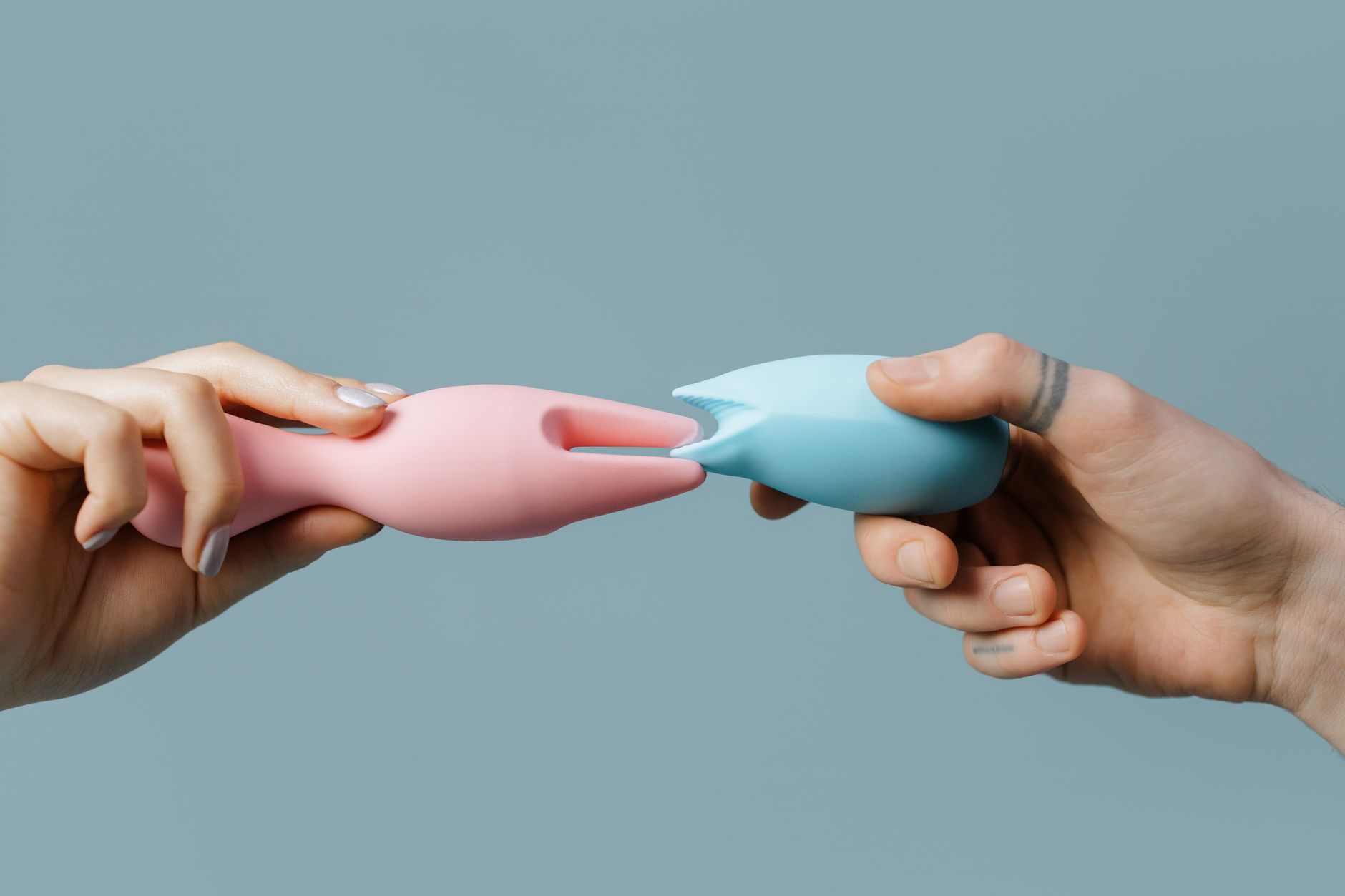
Photo by cottonbro studio on Pexels
Anxiety makes comparison worse
One of the crueler parts of anxiety-related low libido is how much you compare yourself to how you used to be. You remember when sex felt natural. When desire was something that just happened. Now it's effortful and fragile. That comparison often makes the anxiety worse.
Lemon vibrators sidestep the performance comparison. They're not about being "horny enough" or "doing it right." They're about sensation and nervous system reset. You can use one for two minutes and count it as a win. Or 20 minutes. There's no standard, no failure mode. That lower pressure actually helps anxiety people relax faster.
Pairing lemon vibrators with anxiety management
Toys alone won't cure anxiety-related libido loss. But they work best alongside real tools. Breathing work, specifically. If you're using a lemon clitoral vibrator, add a simple 4-count breath pattern: inhale for four, exhale for four. This directly activates your parasympathetic nerve. Your body gets a double signal of safety.
Body scanning helps too. Before you use the vibrator, spend two minutes noticing where tension lives in your body without trying to change it. Shoulders? Jaw? Pelvic floor? Just notice. Then, as you use the vibrator, notice what changes. Does the tension soften? Does your breathing shift? These micro-observations train your nervous system to trust sensation again.
If you're in a relationship, communication matters more than technique. Your partner needs to understand that low libido from anxiety isn't rejection. It's a nervous system state. And some of the best pleasure work happens solo first, using tools like lemon vibrators, before you bring partnered sex back into the picture.
The timeline is slower than you want
Honestly though, nervous system rewiring takes time. Some people feel a shift in their arousal capacity within two weeks of regular use. Others take six to eight weeks. Your anxiety didn't show up overnight. Your libido won't fully return overnight either.
But here's what most people notice first: sensation returns before desire does. You can feel the vibrator working, even if you don't feel "turned on" yet. That sensation is the foothold. Desire follows from there.
If you're not feeling any shift after four to six weeks of regular use, anxiety might have other roots. Relationship issues, past trauma, hormonal imbalance, or depression can all tank libido independently of anxiety. That's when you might need therapy alongside the toy work. Neither alone is usually enough. But together, they're powerful.
When to combine with professional support
Anxiety that's severe enough to completely flatten libido often responds well to therapy. Cognitive behavioral therapy specifically helps retrain the thoughts that fuel the anxiety cycle. Some people also benefit from short-term medication to take the edge off while they do the rewiring work.
A couples therapist or sex therapist can also help if anxiety is affecting your relationship. Sometimes the anxiety is yours. Sometimes it's tangled up with your partner's expectations or intimacy issues. A professional can separate those threads.
Lemon clitoral vibrators are a tool in that larger ecosystem. They're not a replacement for therapy. But they're a concrete, tangible way to reclaim sensation while you're doing the deeper work.
FAQ
Can using a lemon vibrator actually lower my baseline anxiety?
Not directly. What it does is train your nervous system to associate pleasure with safety. Over time, that can reduce some of the vigilance that anxiety creates. But generalized anxiety usually needs therapy, sometimes medication, and often lifestyle changes (sleep, movement, stress management). A lemon clitoral vibrator helps with the sexual-specific anxiety component, not the broader disorder.
How often should I use a lemon vibrator if I have anxiety-related low libido?
Start with once or twice a week for 10 to 15 minutes. Consistency matters more than intensity. Regular exposure helps your nervous system learn that pleasure is safe. If you're using it with a partner, you might experiment with more frequent use. Solo use is often easier when anxiety is high because there's zero performance pressure.
Does anxiety medication affect how lemon vibrators feel?
Depends on the medication. SSRIs can flatten sensation for some people, which might make vibrators feel less intense initially. But that usually improves as your body adjusts to the medication. Benzodiazepines (anti-anxiety meds) can sometimes reduce sensation too. If you're on new medication and toys feel duller, give it four to six weeks before you assume it's permanent.
What if I'm too anxious to even try a vibrator?
Start smaller. Try just holding it in your hand without turning it on, for a couple minutes a day. Let your body get used to the object. Then turn it on at the lowest setting for five seconds. You're teaching your nervous system that novelty is safe. Rushing defeats the purpose. Slow is the right speed when anxiety is high.
Can I use a lemon clitoral vibrator with my partner if I have anxiety?
Yes, but usually after you've done some solo work first. Solo use helps you reclaim sensation without performance pressure. Once you know what pleasure feels like again, bringing a partner in is often easier. That said, some couples find that using a toy together actually reduces pressure for the anxious partner because the focus shifts from traditional sex to shared sensation.
Do lemon vibrators work better than other types for anxiety specifically?
They have advantages. The speed of sensation means less time for your mind to wander back to worry. The suction pattern is distinct from everyday stimulation, which can help your brain file it as "safe pleasure" rather than "regular touch." But ultimately, the best vibrator is the one you'll actually use. If you prefer a traditional vibrator and you'll use it, that matters more than the perfect toy sitting in a drawer.
The bigger picture
Low libido connected to anxiety isn't a character flaw. It's not a sign your relationship is broken or that you're broken. It's your nervous system doing its job too well, treating pleasure as a threat when threat is already on your mind.
Lemon clitoral vibrators help by offering a shortcut back to sensation. They say, "Your body still works. Pleasure is still possible. You're still capable." That matters. It gives you evidence to counter the anxiety narrative. And evidence, repeated often enough, rewires belief.
Start with curiosity instead of pressure. Use it alone. Use it when you're calm enough to feel something. Build from there. Your libido will return. It just needs your nervous system to feel safe first.
References
- Porges, S. W. (2011). The Polyvagal Theory: Neurophysiological foundations of emotions, attachment, communication, and self-regulation. W. W. Norton & Company.
- van der Kolk, B. (2014). The Body Keeps the Score: Brain, mind, and body in the healing of trauma. Penguin.
- Brotto, L. A., & Yule, M. A. (2011). Asexuality: Sexual orientation, paraphilia, or sexual dysfunction? Archives of Sexual Behavior, 40(4), 713-723.
- Kingsberg, S. A., & Rezaee, R. L. (2013). Hypoactive sexual desire in women. Review of epidemiology of related factors and treatment approaches. The Journal of Sexual Medicine, 10(8), 1963-1981.
- Fredrickson, B. L., & Joiner, T. (2002). Positive emotions trigger upward spirals toward emotional well-being. Psychological Science, 13(2), 172-175.