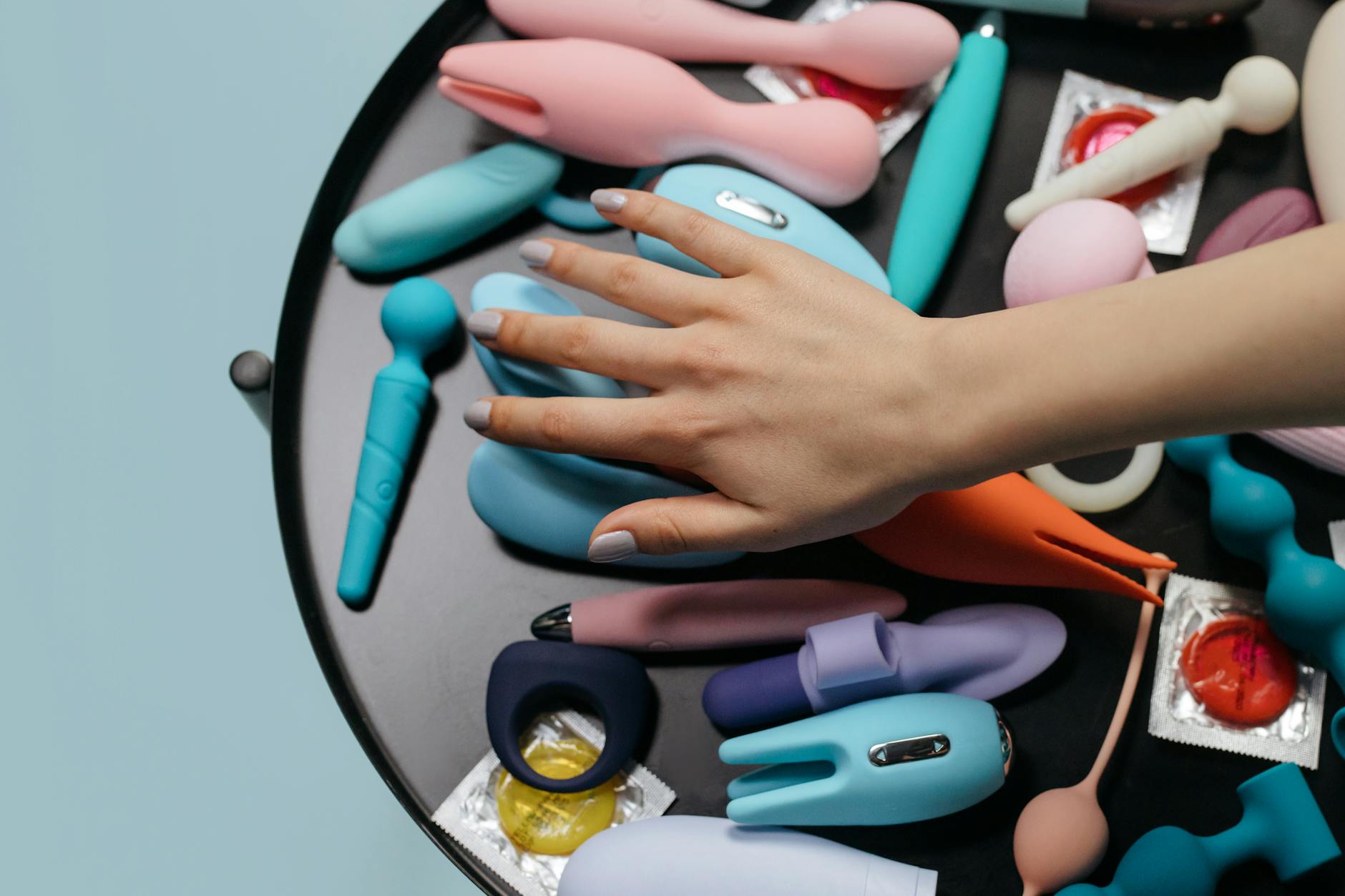
The honest part nobody mentions in the side effects list
You started your SSRI or anti-anxiety med because you needed it. Six weeks in, you're sleeping better, your chest isn't tight, your racing thoughts have quieted down. And then you notice something: your body doesn't feel quite as awake during sex. Or it takes longer. Or the sensation feels muted, like you're experiencing it through a layer of gauze.
That's not a failure of the medication. That's how it works.
Here's what I see in my practice: people who start psychiatric medication often assume any change in sexual response is permanent, a new baseline they'll have to accept. Then they feel ashamed about it, don't mention it to their prescriber, and quietly grieve what they've lost. That combination of secrecy plus misinformation is where the real damage happens. The medication isn't the problem. The lack of honest conversation is.
What SSRIs actually do to arousal
SSRIs (selective serotonin reuptake inhibitors) and other antidepressants work by raising serotonin levels in your brain. More serotonin in your prefrontal cortex means less anxiety, better emotional regulation, less rumination. That's the win.
But serotonin also plays a role in sexual response. Higher baseline serotonin can dampen dopamine signaling in the reward circuits that fire during arousal. It's not that pleasure vanishes. It's that the fast-track to arousal gets quieter. Your body still has all the neural hardware for orgasm. The relay system just runs on a different speed.
This is so common that sexual side effects affect roughly 40-60% of people on SSRIs, depending on the medication and your individual neurobiology. That's not unusual. That's normal. And it's worth naming directly to your doctor.
The three most common shifts I see
Arousal takes longer to build. Where you used to feel a spark in five minutes, now it's 20. Or you don't feel the spark at all until you're already engaged with touch or a toy. This is reactive desire on steroids. You're not broken. You're on medication that's extended the distance between calm and turned on.
Sensation feels softer. Not gone. Softer. Like the volume on pleasure got turned down two notches. You can still orgasm, but it requires more direct, sustained stimulation. Background thoughts stay quieter too, which is the whole point of the medication, but it means your mind isn't adding fuel to the fire.
Orgasms take longer or feel different. Some people report shallower orgasms. Others say the buildup is slower but the release is just as intense once it arrives. Some notice their body needs a different kind of touch to cross the finish line. It's not universal. But if this is happening to you, you're not alone.
Why lemon vibrators help specifically
A lemon clitoral vibrator like the Lem works with these shifts rather than against them. Here's why.
Traditional vibrators buzz. They're fine, but they rely on repeated mechanical stimulation to build sensation. When your baseline arousal is already quieter because of medication, traditional vibration can feel like it's not doing much. You turn up the intensity, but intensity doesn't fix the fundamental problem: your nervous system needs a different kind of input.
Suction-based clitoral vibrators work differently. They use gentle pulsing pressure instead of vibration, creating a direct, sustained pull on the clitoral tissue. For someone on SSRIs, that sustained pressure often feels more noticeable than buzz alone. You're not chasing intensity. You're getting a consistent, rhythmic signal that your body can actually feel and respond to.
I've had clients on SSRIs tell me that suction toys like the Lem are the first thing that made pleasure feel tangible again. Not because medication ruined them, but because the lemon sucker's mechanism matches their current arousal architecture.
What you can adjust right now
Three practical shifts that don't require changing your medication.
Lengthen your warm-up time. Don't plan for 15 minutes of foreplay and 10 minutes of the main event. Budget 30 minutes. Your medication is doing its job in your brain. Give your body the actual time it needs to catch up. This is not a loss. This is information.
Start with external stimulation only. If penetration feels numb or distant, skip it for a few sessions and focus on what you can feel. Suction toys are made for this. The Lem or similar lemon vibrator gives you deep clitoral stimulation without asking your vagina to do anything it's not ready for yet.
Use lube more generously than you think you need. SSRIs don't cause vaginal dryness directly, but they can make you feel less lubricated because arousal is slower to build. Water-based lube costs almost nothing and completely changes the sensation profile. More slip means more nerve activation, which means the stimulation your toy is offering actually registers.
When to talk to your prescriber
Sexual side effects from SSRIs are real and they matter. Your prescriber should know. Here's how I recommend framing it:
"I'm doing well on this medication for my anxiety, and I want to stay on it. I've also noticed that my sexual response has changed, and I'd like to explore options. Can we talk about whether a different SSRI, a lower dose, or an additional medication might help?"
That's not complaining. That's asking for partnership. Some SSRIs cause fewer sexual side effects than others. Sertraline and citalopram tend to be lower-impact than paroxetine. Some people benefit from adding bupropion, which actually enhances dopamine and can counteract the arousal flattening. Your doctor has options.
What they don't have is data if you don't tell them.
The role of lemon vibrators in reconnection
If you're in a relationship, sexual medication side effects become a couples' issue whether you want them to or not. And this is where I see the most unnecessary distance open up.
Your partner feels you're less responsive and maybe they internalize it as rejection. You feel broken and ashamed, so you pull away. Neither of you names the medication. The distance compounds.
Instead: you get a lemon clitoral vibrator. You use it solo first, a few times, to rebuild your own connection to pleasure on the new baseline you're on. Then you bring it into partnered sex, and suddenly there's a concrete tool that says "this is how my body works right now, and we can work with it together." That shift from "something is wrong with me" to "here's what turns me on now" changes everything.
Your partner isn't replacing you. You're not replacing them. You're both learning a new language for pleasure together.
FAQ: SSRI medication and sexual response
Will my sexual response come back if I stop taking my medication?
Yes, usually. But stopping your SSRI is not the answer to sexual side effects, and I don't recommend it without talking to your prescriber first. Withdrawal can be serious, and going back off medication often means your anxiety or depression comes roaring back. Instead, talk to your doctor about adjusting the dose, switching medications, or adding something that supports arousal. You don't have to choose between mental health and sexual pleasure.
How long does it take for sexual side effects to stabilize?
It varies wildly. Some people adapt within weeks. Others plateau at a new baseline after a few months. Some people do better once they've learned how their body works on medication and stop fighting the change. If you're three months in and nothing has shifted, that's the moment to have a detailed conversation with your prescriber about other options.
Does adding a lemon vibrator mean my partner and I won't be able to have sex without it?
Not at all. A lemon clitoral vibrator is a tool that helps you access sensation and arousal that the medication has muted. Using it teaches your nervous system what pleasure feels like at this new baseline. Many people find that once they've rebuilt that connection, they can access it without the toy too. But honestly, if you and your partner both love using it, there's nothing wrong with that either. Tools don't replace intimacy. They support it.
Can I use a lemon sucker if I'm also on anti-anxiety meds that aren't SSRIs?
Yes. Sexual side effects show up with various psychiatric medications: tricyclic antidepressants, some atypical antipsychotics, even certain blood pressure meds. If your medication is flattening arousal, a suction toy can help. The mechanism is the same. Your nervous system needs a stronger, more direct signal to break through the dampening effect.
Will my prescriber judge me for asking about sexual side effects?
A good one won't. Sexual function is a legitimate health outcome. If your prescriber dismisses it or acts weird about it, that's a sign you might benefit from a second opinion. Psychiatrists and primary care doctors who specialize in treating adults know that sexual health matters. Your pleasure counts.
Is it normal to need more stimulation on SSRIs?
Completely normal. Your body isn't broken. Your medication raised the threshold for arousal response. That's not a problem to solve with shame. It's a parameter to work with. Suction-based lemon vibrators are specifically designed for people who need more targeted, sustained stimulation. You're not asking for too much. You're asking for the right kind.
The bottom line
Your medication is helping your brain. That's the whole point. If sexual response has shifted, that's not a failure of the medication or a failure of your body. It's a side effect that we can actually work with. Lemon vibrators work because they match the arousal architecture you have now, not the one you had before. Your partner can be part of this. Your pleasure still matters. And you deserve to feel good again.
If you want to explore options, start with a conversation with your prescriber. If you want to rebuild your own sense of pleasure while you're figuring out the medical piece, a lemon clitoral vibrator is exactly the tool for that. Your nervous system will thank you.