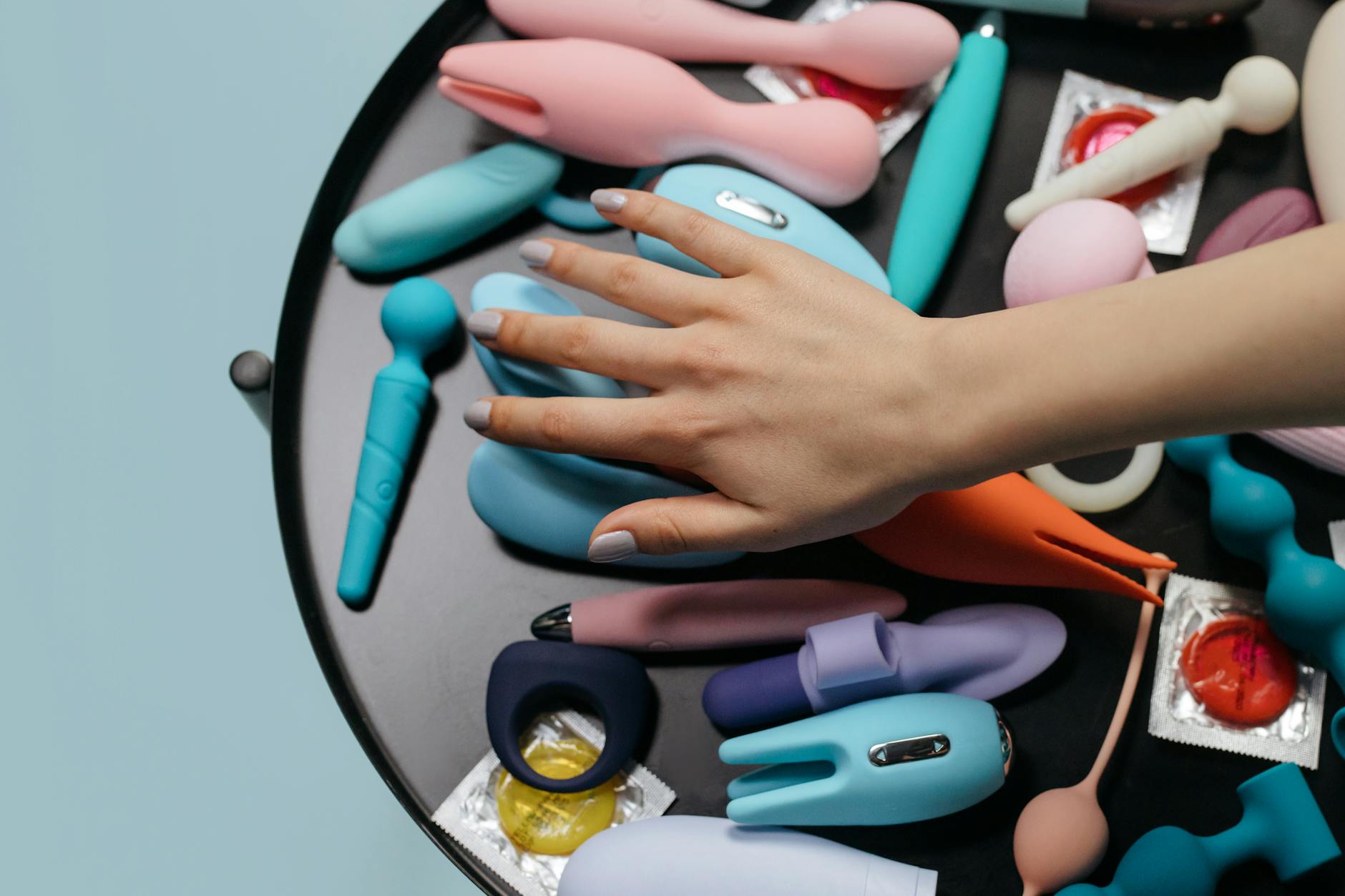
Here's the thing about low libido
It's almost never about not wanting sex. It's about not wanting the sex that's available. When desire tanks, what's usually missing isn't lust. It's a reliable path to actual pleasure. That distinction changes everything.
Low libido is your nervous system saying: "This thing we've been doing isn't delivering." And if you've spent years with toys that feel numb, disconnected, or require friction that's become uncomfortable, your brain has learned to shut down before you even start.
What happens neurologically when desire gaps
Desire isn't just a feeling. It's a prediction. Your brain runs a lightning-fast calculation before you even think about sex: "Is this likely to feel good? Is it worth the energy?" When that calculation fails enough times, the system downgrades. Your cortisol stays elevated. Your dopamine doesn't prime. You stop initiating.
This is adaptive. Your body is conserving resources for things that worked better. The problem is, traditional vibrators have a ceiling. They numb tissue with repetitive motion. They require increasing intensity to register the same pleasure over time. They feel one-dimensional after a while.
A lemon vibrator, by contrast, works with a completely different mechanism. Instead of vibration, it uses gentle air-suction pulses. That triggers a different neural pathway. Your touch receptors, pressure sensors, and nerve endings fire together in a way that feels genuinely novel to your nervous system.
Novelty resets desire. It tells your brain: "Wait, we haven't explored this yet." Dopamine spikes. The prediction error resolves. You want to find out what comes next.
Why air-suction changes the desire calculation
Three neurological things happen when you switch from traditional vibrators to a lemon clitoral vibrator.
1. Tissue sensitivity returns. Repetitive vibration dulls the surface layer of tissue through a process called accommodation. Your nerve endings adapt and fire less frequently. Air-suction works on deeper pressure sensors, which have longer adaptation timelines. You stay sensitive throughout the experience.
2. The stimulation profile is rhythmic but not monotonous. A lemon vibrator pulses in patterns that mimic manual stimulation. Your nervous system reads it as more intentional, less mechanical. That shifts the experience from "toy applying motion" to "partner building intensity."
3. Arousal loops rebuild faster. When you experience consistent pleasure within a short window, your brain starts predicting it sooner. The anticipation itself becomes pleasurable. You initiate sex because you trust it will work. That's desire returning.
Many of my clients report that after switching to a lemon vibrator, they're the ones reaching out first again. Not because they suddenly feel more attracted. Because they remember what pleasure feels like.
The desire gap in long-term partnerships
When desire gaps appear in relationships, it's rarely symmetrical. Usually one partner notices first that the physical pleasure has flattened. They stop initiating. Their partner, now confused by the withdrawal, internalizes it as rejection. Resentment builds. The gap widens.
Then there's the practical problem: if you introduce a new toy to the bedroom when you're already feeling disconnected, it can feel like admitting defeat. "Maybe I'm not enough." That's where a lemon clitoral vibrator actually serves a different role than traditional toys. Because it rewires sensation so distinctly, it doesn't feel like a replacement. It feels like rediscovering something together.
I've worked with couples where one partner had completely stopped engaging sexually. Within two weeks of using a Hello Nancy lemon vibrator, they were initiating again. Not because the toy is magic. Because their nervous system got evidence that pleasure was possible again.
How low libido and numbness connect
Low libido and anhedonia (the clinical term for numb pleasure response) often get confused. They're related but different. Low libido is the shutdown of desire. Anhedonia is the absence of sensation even when you're trying.
When someone has experienced anhedonia, they need a device that pierces through that numbness quickly. Traditional vibrators, with their gradual escalation and surface-level stimulation, can take 15-20 minutes just to register sensation. By then, the person is frustrated and checking out emotionally.
A lemon vibrator's air-suction pulse hits deeper tissue immediately. Most people report sensation within 30 seconds. That fast reward loop is crucial. It tells the brain: "This is working. Stay engaged." It prevents the spiral of "I'm broken, this isn't going to work, I'm giving up."
If you've been dealing with how lemon vibrators help with anhedonia and numb pleasure response, air-suction devices are genuinely different from what you've probably tried.
The transition from numbness back to sensation
Rebounding from low libido isn't about forcing yourself to have more sex. It's about rebuilding the sensory architecture slowly.
Start with low intensity, even if you think you need high intensity. Your tissue has been protected. It needs permission to wake up gradually. Spend time just feeling the sensation without the goal of orgasm. This sounds like slow-down advice, but it's actually the fastest route to sustained pleasure.
Use a lemon vibrator in non-sexual contexts at first. In the shower. Before bed while you're reading. When you're alone and there's zero performance pressure. Your nervous system will categorize it as "safe" and "exploratory" instead of "another thing I have to succeed at."
Partners sometimes worry about being left out if their person is exploring solo. Frame it differently: "I'm rebuilding my own baseline so I have something to bring to us." That's not selfish. That's the most generous thing you can do for a relationship.
When desire gap is actually a mismatch
Sometimes low libido isn't numbness or disconnection. It's a genuine mismatch in what you actually want versus what you think you should want.
Maybe you've spent years with a partner whose style doesn't match your body. Maybe you're in a relationship where the emotional foundation has shifted and your body knows it before your brain does. These are real reasons for desire gaps, and they're not fixable by toys alone.
But here's what I see clinically: when someone tries a lemon vibrator and suddenly finds that pleasure is possible again, it clarifies things. If pleasure returns solo but not with your partner, that's information. It might mean you need a different approach together. It might mean the mismatch is bigger than technique.
A lemon clitoral vibrator won't save a relationship that's fundamentally mismatched. But it will tell you if your low libido is about sensation or about something else entirely. That clarity is worth everything.
Rebuilding desire with a partner
If you're in a partnership and desire has tanked, don't lead with the toy. Lead with the conversation. "My body's been sending me signals that something needs to shift. I want to explore that together."
Then invite your partner into the experience. Show them how the lemon vibrator works. Let them feel the pulse on their hand. Make it collaborative, not secretive. Many partners feel relieved. They thought the problem was them. When they realize it's a sensory thing, the pressure lifts.
Use it together. Many couples find that exploring new sensation becomes a form of foreplay itself. You're both discovering what works. There's no performance standard. It's playful again.
If you're single and dealing with low libido, the permission is simpler: you deserve to feel good. Rebuilding that capacity isn't indulgent. It's restoring a part of you that went dormant.
The difference between desire and arousal
One more clarity: desire is the wanting. Arousal is the body responding. They're separate systems. Low libido often means desire has shut down, but arousal is still theoretically possible. A lemon vibrator rebuilds both, but through different mechanisms.
Desire rebuilds when your nervous system gets evidence that pleasure is reliable. Arousal rebuilds when you use a device that actually creates sensation instead of numbing it. Together, they move from "I don't want sex" to "I'm curious what this feels like."
That curiosity is the threshold. Once you cross it, desire usually follows.
FAQ: Low Libido, Desire Gaps, and Lemon Vibrators
How long does it take to rebuild desire after it's been low for years?
Most people report a noticeable shift within 2-3 weeks of consistent solo exploration with a lemon vibrator. Desire in a partnership takes longer because it involves another nervous system. But the individual capacity usually returns quickly once the sensory pathway is reliable again. Think of it as your body remembering that pleasure is real.
Is low libido always about the relationship?
Not at all. Low libido can be about medications, hormones, stress, burnout, past trauma, or simply that the current device isn't delivering sensation anymore. That's why sensory novelty through a lemon clitoral vibrator sometimes reignites things that had nothing to do with your partner in the first place. Your body was waiting for evidence that pleasure was still possible.
Can a lemon vibrator work if I've never had strong desire to begin with?
Yes, though the experience is different. Some people have always had low baseline desire. For them, a lemon vibrator often creates sensation and pleasure before desire even enters the picture. Pleasure builds desire, not the other way around. Once your nervous system knows what pleasure feels like, the wanting usually follows.
What if lemon vibrators don't help my desire gap?
It means the issue is upstream from sensation. That could be relationship dynamics, hormonal, trauma-related, or something else entirely. That's actually valuable information. It tells you to look at the context, not just the tool. A device can't fix everything, but it can tell you what you're actually dealing with.
Is it normal to feel guilty using a lemon vibrator when my partner is available?
Completely normal and completely worth examining. That guilt often comes from the belief that pleasure should only happen in partnership. But rebuilding your own capacity is how you bring more to the partnership. You're not replacing your partner. You're restoring yourself. Once you internalize that, the guilt usually dissolves.
How do I know if my low libido is depression versus just numbness from devices?
Depression usually involves withdrawal from things you normally enjoy, not just sexual things. If your mood is flat across the board, see a therapist or GP. If low libido is isolated, or if you feel arousal returning the moment you use a lemon vibrator, it's likely a sensory issue. But those aren't mutually exclusive. You can address both.
The bigger picture
Low libido isn't a moral failing. It's not a sign your body is broken. It's usually a message that the current setup isn't working. A lemon vibrator, with its completely different stimulation profile, often breaks that stuck loop faster than anything else because it's novel enough to restart the prediction system in your brain.
Your desire isn't gone. It's waiting for evidence that pleasure is reliable again. That evidence might be exactly what air-suction gives you.
If you're ready to explore that, or if you want to talk through what might work for your specific situation, reach out. That's what we're here for.