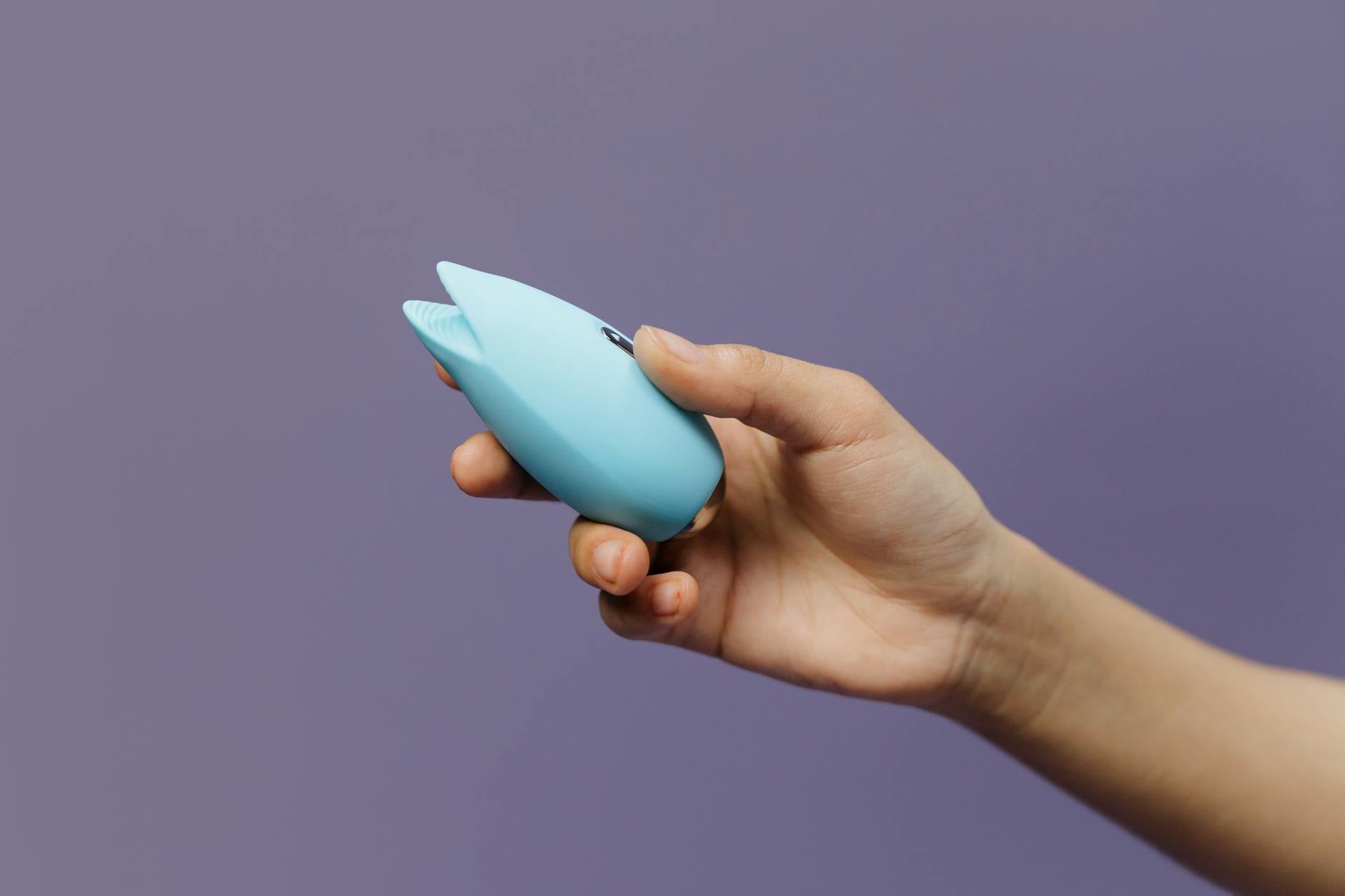
Why Lemon Vibrators Work Better for Sensitive Vulvas
Let's be real: not every clitoral vibrator works for every body. If you've ever reached for a standard vibrator only to feel raw, overstimulated, or like the sensation was just too much, you're not alone. And you're definitely not broken.
There's a biomechanical reason why lemon vibrators (and their suction-based cousins) feel fundamentally different than traditional vibrators. Understanding that difference might unlock the kind of pleasure you've been searching for but couldn't quite access with conventional toys.
The friction problem with traditional vibrators
Most clitoral vibrators work by oscillating back and forth at high speed. That's direct, continuous friction against sensitive tissue. If your vulva tends toward sensitivity, that friction can feel overwhelming, even painful. After a few minutes, the tissue gets irritated, and what started as pleasure becomes more like a burning sensation.
This isn't a personal failing. It's physics. Sensitive vulvas have thinner skin, more permeable membranes, and sometimes higher inflammation responses. Adding high-frequency friction to that environment is like using a regular washcloth on sunburned skin.
The clitoris itself is wildly sensitive. It has roughly 8,000 nerve endings packed into a small space. Traditional vibrators can overload that density very quickly, which is why people with sensitive tissue often find they need to use barriers (like fabric or a hand) between themselves and the vibrator.
How suction works differently
Lemon clitoral vibrators use air-pulse or suction technology instead of vibration. They create a gentle rhythmic sucking sensation that stimulates the clitoris without the same grinding pressure.
Think of it this way: a traditional vibrator is like drumming your fingers on a table rapidly. A lemon vibrator is like gently pulling and releasing. The sensation intensity builds differently. There's less immediate overload, and the nerves fire in a different pattern.
For people with sensitive vulvas, this matters because suction-based stimulation:
- Doesn't create the friction-and-heat buildup that causes tissue irritation
- Allows arousal to build more gradually, which gives delicate tissues time to naturally lubricate and swell
- Spreads pressure more widely across the area rather than concentrating it in one spot
- Works with a wider range of arousal levels. You can start gentle and ease up.
It's not that suction is "less intense." It's that it's a different kind of intensity, and for certain vulvas, it's the kind that actually works.
Sensitivity and arousal are separate conversations
Here's where a lot of people get confused. If you're sensitive, it doesn't mean you're less responsive to stimulation. It means your tissue is more reactive. Those are different things.
Some of the most intensely pleasurable people I work with in my practice have highly sensitive vulvas. The issue isn't responsiveness. It's finding the right type of stimulation that awakens that responsiveness without triggering pain or soreness.
A lemon vibrator doesn't suppress sensation. It transforms how the sensation arrives. Many people find that switching from traditional vibrators to suction-based toys actually increases their pleasure because they can relax. There's no bracing against pain, no racing against the clock before irritation sets in.
Your partner, if you have one, often notices this too. You're more present. You're not tensing up. The whole experience becomes more connected.
What sensitivity actually looks like
Sensitive vulvas can show up differently from person to person. You might notice:
Redness or inflammation after using traditional vibrators. Some people's vulvas get visibly swollen and angry within five minutes of a standard vibrator. Others just feel a burning sensation without visible redness.
Difficulty reaching orgasm with traditional toys despite being perfectly capable of orgasm other ways. This often means the toy itself is the problem, not you.
Need for barriers or modifications. Some people use their hand or clothing between themselves and the vibrator to reduce intensity. That's a sign the tool itself might not be the right fit.
Sex toys designed specifically for sensitive skin matter. And while the right product choice helps, the bigger shift is understanding your own body's architecture.
Why material quality compounds the sensitivity issue
It's not just the technology. The material of the toy itself matters enormously for sensitive skin.
Silicone is the gold standard because it's non-porous, doesn't harbor bacteria, and doesn't contain phthalates (chemicals that can irritate tissue). But not all silicone is created equal. Medical-grade silicone, which is what reputable toy makers use, is smoother and less likely to cause microabrasions.
Cheaper materials break down over time and shed particles that irritate already-sensitive tissue. If you've had bad experiences with toys, it might not have been the vibration at all. It might have been what the vibration was happening against.
Lemon clitoral vibrators from Hello Nancy use body-safe silicone specifically because suction works best on smooth, high-quality material. Cheap knockoffs have rough seams and uneven surfaces that irritate rather than pleasure.
The warm-up window: why sensitivity changes with arousal
Here's something most guides don't mention: your vulva's sensitivity fluctuates with arousal level.
When you're not aroused, your tissue is thinner, less engorged, and genuinely more sensitive to pressure and friction. When you're aroused, the clitoris swells, tissue becomes more robust, and the same stimulation that would hurt when unaroused feels amazing.
This means the approach matters. If you jump straight to a vibrator before you're properly aroused, even a gentle one can feel too much. But if you warm up first with hands, oral, or simple touching, your body's own physiology protects you.
Suction-based toys actually help with this transition because they don't require the same state of arousal to feel good. Many people find lemon vibrators feel pleasant from the very first moments of play, which means you can use them as part of your warm-up rather than only when you're fully ready.
Positioning and pressure control
Another reason lemon vibrators feel better for sensitive vulvas: you have more control over pressure.
With a traditional vibrator, you're applying it at whatever speed the toy runs at. You can pull it away if it's too much, but in the moment, you're somewhat locked into that intensity.
Lemon clitoral vibrators let you adjust position, angle, and how directly you apply them. You can hover just above your clitoris instead of pressing it directly. You can move side to side. You can use the suction on the hood of the clitoris rather than the exposed bud. That flexibility makes a huge difference for sensitive bodies.
The recovery issue
One thing I notice with my clients who have sensitive vulvas: they often need recovery time between sessions. If they've used a traditional vibrator, they might feel sore for 24-48 hours afterward, which means less frequent pleasure and sometimes frustration in relationships.
People who switch to suction-based options like lemon vibrators report way less soreness. Some report almost none. That changes what's possible. You can explore your pleasure more often without your body punishing you for it.
When sensitivity signals something else
There's a line worth knowing. Some vulvar sensitivity is just architecture. Some is related to vulvodynia, lichen sclerosus, or other conditions that deserve medical attention.
If you're sensitive to almost everything, including touching your own vulva normally, or if pain appears during everyday activities, that's worth checking with a gynecologist. Certain conditions benefit from specific treatments, and no toy is a substitute for that.
But most of the time, when someone says "I'm sensitive," they mean standard vibrators hurt and they're looking for an alternative. That's where switching to a lemon sucker or air-pulse toy often changes everything.
Making the switch from traditional to suction-based
If you've been using traditional vibrators and want to try a lemon vibrator, here's what helps:
Start at the lowest setting. Suction toys often have multiple intensity levels. Begin at level one, even if it feels gentle. You're retraining your body's expectations.
Use it during arousal, not as your entire warm-up. Let yourself get aroused first with hands, touch, or whatever works. Then introduce the toy.
Take breaks. If you're used to traditional vibrators numbing you into orgasm, suction might feel oddly good the entire time, which means you might not notice if you're using it longer than your body loves. Check in with yourself.
Don't expect it to feel the same. The whole point is that it's different. Some people prefer suction once they try it. Some switch back and forth depending on mood. Both are fine.
The pleasure equation
Let me be direct: if sensitive vulvas have been missing out on pleasure because standard vibrators feel wrong, that's a design problem, not a you problem. Your sensitivity isn't a limitation. It's information about what your body actually needs.
Lemon clitoral vibrators exist because someone understood that sensitivity and pleasure aren't opposites. The right tool doesn't fight your body's architecture. It works with it.
FAQ: Common Questions About Lemon Vibrators and Sensitivity
Are lemon vibrators less intense than traditional vibrators?
Not exactly. They're differently intense. A lemon vibrator might feel less overwhelming because the pressure is distributed differently, but some people find suction more intensely pleasurable once their body adjusts. Intensity and comfort aren't the same thing. You can have intense sensation that still feels good, and that's what most sensitive folks are after.
Can I use a lemon vibrator if I'm not sure whether I'm actually sensitive?
Absolutely. Even if you've done fine with traditional vibrators, trying a suction-based toy often reveals new kinds of pleasure. Some people prefer switching between both types. There's no downside to exploring, and you might discover you actually prefer lemon vibrators even though you never thought you needed them.
How long does it take to adjust to a lemon vibrator if I've only used traditional vibrators?
Most people notice a difference within the first 1-3 uses. Your body learns pretty quickly that this is a different sensation. That said, if you're used to traditional vibrators getting you to orgasm quickly, a lemon vibrator might take longer at first because it works differently. That's not a failure. It's usually a more sustained, expansive experience.
Will a lemon vibrator work if I have trouble reaching orgasm?
Sometimes yes, sometimes it's more complicated. If your trouble reaching orgasm is because traditional vibrators overstimulate you and then you go numb, switching to suction might help enormously. If your difficulty is rooted in something else (medication, stress, disconnection from your partner), a different toy is part of the solution, not the whole thing. But it's definitely worth trying.
Are there any vulvas that lemon vibrators don't work well for?
They're designed specifically for sensitive tissue, so they're ideal for that population. People without sensitivity can absolutely use them and often love them anyway. The only real caveat is if you prefer very direct, high-frequency vibration, you might find suction less satisfying. But that's a preference thing, not a compatibility thing.
Do lemon vibrators need different lubricant than traditional vibrators?
Yes, actually. Use water-based lubricant with silicone toys. Silicone-based lubes can damage silicone toys over time. Water-based lubes dry faster and may need reapplication, but they're the right choice. For sensitive vulvas, water-based is often better anyway because it's less irritating than some synthetic or oil-based options.
Moving forward
Your vulva's sensitivity isn't a problem to overcome. It's information about what works for your body. When you find the right tool, pleasure becomes easier. The soreness goes away. The frustration lifts. You stop bracing and start relaxing.
If you've been struggling with traditional vibrators, try a lemon vibrator. The shift from friction-based to suction-based stimulation changes what's possible. For many sensitive bodies, it's the difference between tolerating pleasure and actually enjoying it.
Have questions about whether a lemon clitoral vibrator is right for you? Get in touch. I'm here to help you figure out what works for your body, not what's "supposed" to work.
Related Reading
Want to dive deeper into how different toys work? Check out our guide on how lemon vibrators feel different than traditional vibrators. If you're ready to pick your first lemon sucker, we've also put together a resource on lemon vibrators for sensitive skin.