Let's talk about what changes at 50
Something shifts in your fifties. Not all at once. Not dramatic. But real. The tissue around your vulva gets thinner. Your clitoral glans becomes more sensitive in a way that sometimes feels good and sometimes doesn't. Lubrication takes longer to arrive, if it arrives the same way at all. And the kind of stimulation that worked for decades starts feeling either too intense or weirdly distant.
Here's what I tell my clients: this isn't a failure. It's information. Your body's telling you it needs a different tool.
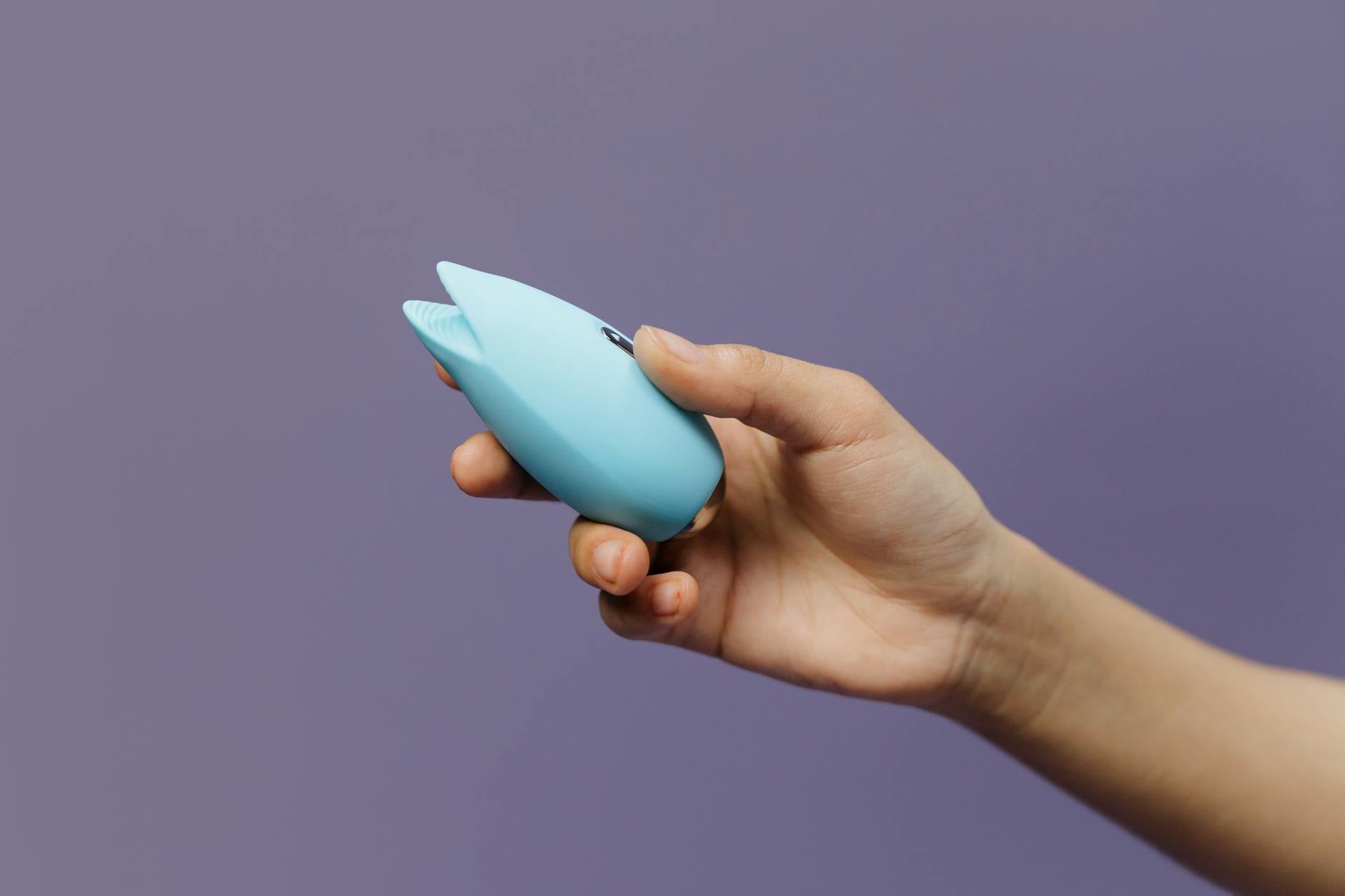
That tool is often a lemon vibrator. And there's a reason why.
How tissue changes shape what feels good
After 50, estrogen has been declining for years. The vulva reflects that change. The epidermis thins. The collagen network loosens. Blood flow to the area can be slower to ramp up. For a lot of women, that means the firm, grinding pressure of a traditional vibrator starts to feel harsh. The sensation isn't pleasure. It's friction.
Lemon clitoral vibrators work differently. They use suction and air-pulse technology instead of direct vibration. That matters because suction stimulates the nerve bundles in the clitoris without the mechanical pressure that can feel abrasive on thinner tissue. You're not pressing into the area. You're drawing sensation into it.
Many of my clients in their fifties report that lemon sexual toys feel softer, more nuanced. Less like being hammered and more like being called to something.
Why speed isn't your friend anymore
Traditional vibrators operate on a simple math: more intensity equals more sensation. That logic breaks down in your fifties. Higher speeds on thinner tissue can actually numb the area instead of energizing it. You end up chasing sensation that keeps backing away.
A lemon sucker operates at variable patterns and pulses, not purely speed. That means you can build arousal gradually. You can adjust the intensity in ways that feel responsive rather than overwhelming. Most women find they need less speed and more staying power. A pattern that moves and pauses, rather than one that just gets faster.
This is why women who switch from traditional vibrators to a lem vibrator often say it feels like a completely different experience. It's not that your body is broken. It's that you needed a tool designed for how you actually feel now.
The mental piece nobody mentions
Your fifties come with permission your thirties and forties didn't. You've likely stopped performing sex for someone else's timeline. You know what you want. You're less willing to tolerate discomfort in the name of keeping things "normal."
That mental shift changes what pleasure actually means. For many women, the best orgasms in their fifties come from curiosity rather than routine. From paying attention to what works today instead of what worked five years ago.
Lemon adult toys seem to work better in that headspace because they demand presence. You can't zone out the way you could with older vibrators. You have to stay with the sensation. You have to notice it. And that attention, paradoxically, deepens the experience.
What the adjustment period actually looks like
I'm going to be honest: the first time is often disappointing. You might feel nothing. You might feel too much. You might have to find the right pattern, the right angle, the right amount of pressure. That's normal. Your nervous system is used to one kind of signal and you're sending it something new.
Give yourself two weeks of regular use. Not hours. Ten, fifteen minutes. Let your body recalibrate. Try it at different times of your cycle if you menstruate. Try it when you're already warm and aroused rather than cold-starting. Most women find that by week three, everything clicks into focus.
One thing that helps: start with pattern one. Not pattern three. Not the strongest setting. Let your nervous system meet the sensation half way. Speed it up only when you're bored, not when you're impatient.
Why lemon clitoral vibrators beat other options
You could try adding more lubricant to traditional vibrators. That helps for some women. You could try topical estrogen cream, which thickens tissue and makes everything more responsive. That's great. Do it. But a lemon vibrator is not a substitute for either of those things. It's doing something completely different.
A lemon sucker is actually gentler on surgical scars if you've had recent procedures. It's better for women taking medications that numb sensation, because you're not fighting against numbness with brute force. And for women whose partners have moved away from physical intimacy, a lemon toy gives you direct access to pleasure on your own terms.
Lung devices are everywhere now. The brand options are growing. The Hellanancyslem lemon vibrator is specifically engineered for this. For the tissue changes and sensation shifts of women in midlife and beyond.
The conversation with your partner, if you have one
If you're partnered, using a lemon vibrator solo and using it with a partner are two completely different conversations. Neither is mandatory. But if you want to involve them, the shift usually goes like this.
First, you use it alone. You learn what feels good. You get comfortable with the sensation and the patterns. You let your body trust it. Then, if you want, you show your partner. Most partners are relieved. You're not unhappy. You're not blaming them. You're solving a logistics problem together.
Many couples find that a lemon toy actually brings them closer because now both people have options that actually work. Sex doesn't have to be the same every time. You're not hoping traditional vibration will eventually click. You're exploring something that was designed with your body's actual changes in mind.
When to see a doctor
If you're experiencing pain during arousal or sex, talk to your GP or gynecologist before you buy anything. Genitourinary syndrome, infection, or other issues might need attention first. A lemon vibrator can't fix everything.
If lubrication is the main issue, topical estrogen creams are often prescribed and they work fast. If sensation feels completely absent, that's sometimes a sign of nerve compression or other issues worth investigating.
But if you've ruled out medical stuff and you're just finding that the sensation quality has changed. That traditional stimulation feels wrong now. That you're chasing something that keeps backing away. Then a lemon sucker is often exactly what your body's been asking for.
The real shift at 50
Your fifties aren't about recovery or compensation. They're about precision. Your body's teaching you what actually works. A lemon clitoral vibrator is often the tool that lets you listen to that signal clearly. Not because your body is broken. But because you've got the chance now to design pleasure around how you actually feel, not how you used to feel or how you think you should feel.
That's the kind of power that comes with time.
FAQ: Lemon Vibrators and Women Over 50
Do I need to use lubricant with a lemon vibrator if I'm 50 or older?
Yes, often. As estrogen declines, natural lubrication can be slower to arrive or lighter in volume. A water-based lubricant helps the suction mechanism work better and makes the whole experience more comfortable. It's not a sign of dysfunction. It's just part of how your body works now. Apply it to the toy, to your vulva, or both.
Can I use a lemon vibrator if I'm on hormone replacement therapy?
Completely. Some women on HRT find their tissue is thick enough that traditional vibrators work fine again. Others still prefer lemon sexual toys because the sensation profile is just different and better for them. HRT changes the pace of things but doesn't lock you into any particular toy. Use what feels good.
How long does it take to adjust to a lem vibrator if I've used traditional vibrators for decades?
Two to three weeks for most women. Your nervous system is used to direct vibration. Suction is a new signal. Give yourself grace during the learning curve. Some women love it immediately. Others need time. Both are normal.
Is a lemon vibrator safe if I've had pelvic floor physical therapy?
Generally yes. In fact, many pelvic floor therapists recommend lemon toys because they require less pressure and pelvic floor clenching than traditional vibrators. That said, talk to your PT if you're uncertain. Everyone's situation is different.
What if a lemon vibrator doesn't feel like anything at all?
Try these in order: make sure you're using lubricant, try a different pattern, make sure the device is clean and fully charged, give yourself more time in the arousal phase before you turn it on, try it at a different time of day when you feel more present. If none of that works after three weeks, it might just not be the toy for your body. That happens. Return it and try something else.
Can I use a lemon vibrator during menstruation?
Yes. Some women find they're more sensitive during their period and prefer a gentler approach like suction over direct vibration. Others don't notice a difference. Listen to your body. If it feels good, it's fine. Wash the toy afterward with mild soap and warm water, like always.
What I wish more women knew
The conversation about aging and pleasure is usually about loss. What you're losing. What your body can't do anymore. But that's not the whole story. In my work with couples, I see something different in women's fifties and beyond. I see women who've finally stopped apologizing for what they want. Who've learned to ask. Who've figured out that their pleasure matters.
A lemon vibrator is just the tool that makes that possible. Your body isn't broken at 50. It's asking for something real.